



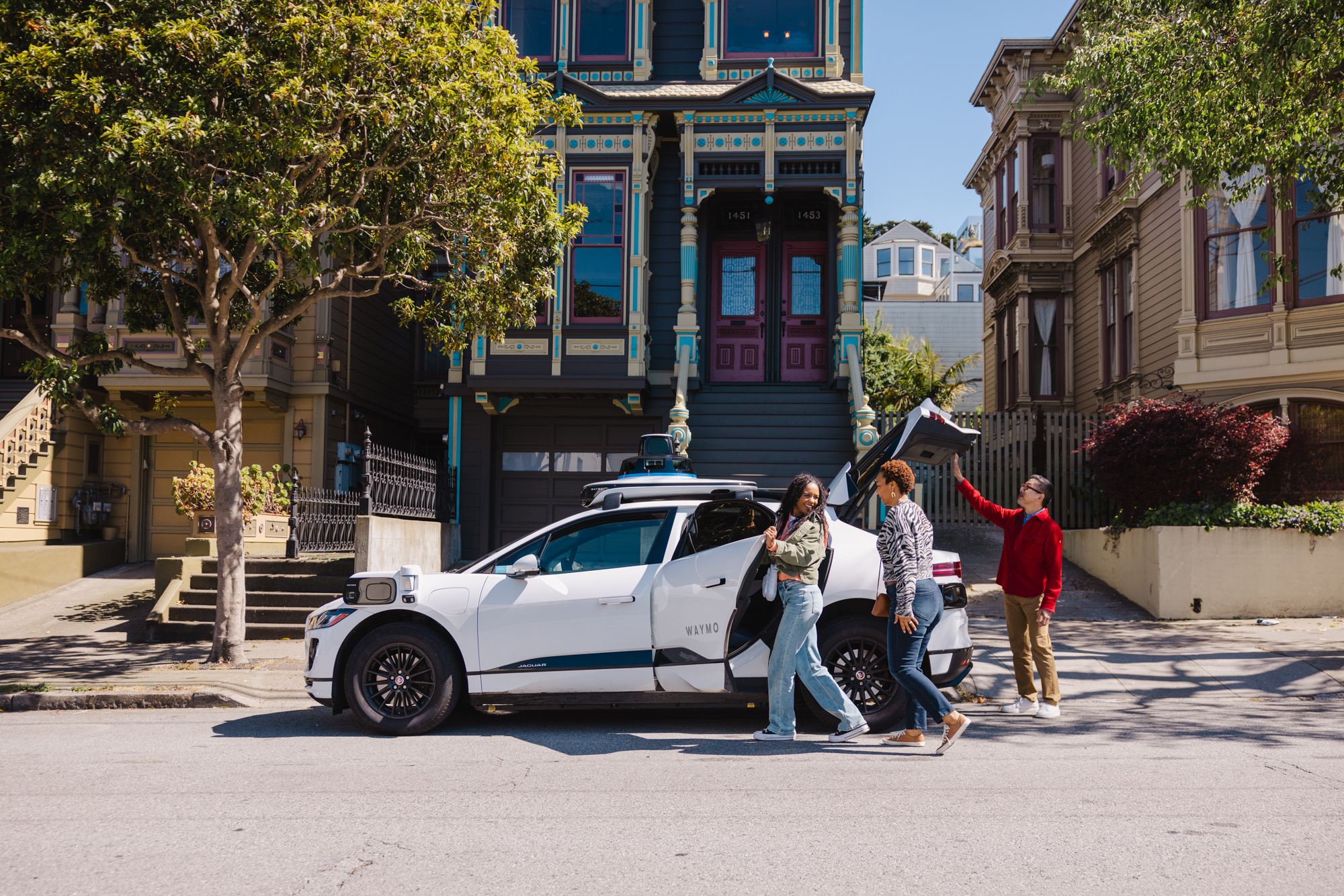
From the disaster of Loop—a city-run autonomous shuttle providing transport to and from Treasure Island—to hundreds of Waymo vehicles in service and a Zoox launch set in 2026, the Bay Area’s status as the top global AI hub has successfully brought autonomous vehicles (AVs) to its streets. As of August 2025, Waymo operates 800 vehicles in San Francisco and the Peninsula. After gaining testing access to San Francisco International Airport (SFO) on September 16, 2025, and beginning to test larger vehicles, it is clear Waymo is changing the transportation industry in the Bay Area.
AVs and human ride-sharing have many key differences. Waymo’s advanced AV technology has demonstrated a safety record that outperforms human drivers, positioning the company to disrupt the rideshare industry. It is expected that as the technology continues to improve, companies in the rideshare market, like Uber and Lyft, will be the most directly affected. Despite this, public transit options like Muni and BART are said to largely remain in high demand.
When rideshare companies like Uber and Lyft were released in the early 2010s, bus ridership decreased by an estimated 12.7% from 2010-2016, according to a University of Kentucky study from 2019, and had insignificant effects on light rail, which is not affected by traffic congestion, unlike buses.
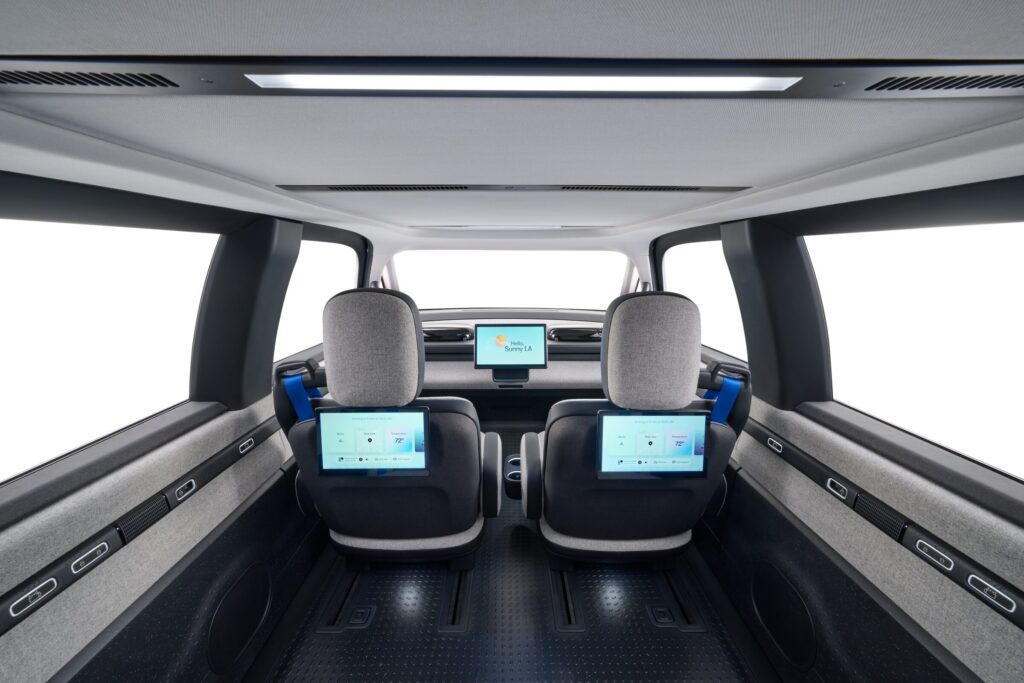
Photo courtesy of Waymo
In 2021, after the pandemic, Uber usage skyrocketed, with a record 118 million riders in 2022. However, SFMTA lost 21% of its riders. Before this shift, from 2019-2021, car usage in SF increased by 13%, according to SFMTA reports.
Just 20 months after launching as a commercial service, Waymo captured 27% of the rideshare market in San Francisco. On average, a Waymo ride costs $20.43, which is significantly more expensive than Uber’s average $15.58 per ride. However, Muni’s $2.85 fare proves the most affordable travel option, making it more accessible than rideshare apps for many.
“Public transportation is just still going to be cheaper for people,” Market Analyst David Barnett said. For Waymo in particular, the steep cost is reflective of its huge produc
tion cost, often exceeding $250,000 per vehicle.
“It is a novelty, right?… Consumers pay money for value…[and] people will pay to have a consistent experience. Even if it is not a great experience, reliable mediocrity is quite sellable,” CEO of Real Time Innovations, Stan Schnieder, said. Some tour guides had been offering “experiences” to tourists, using Waymo to take them to landmarks around the city.
But rideshare apps have become a safety concern for many.
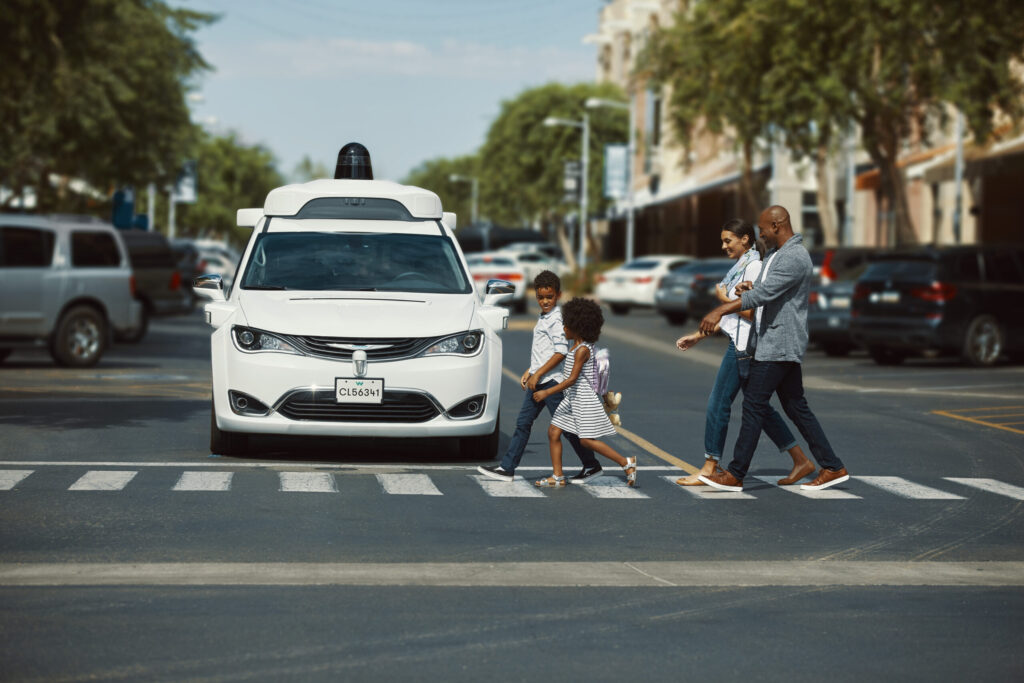
Photo courtesy of Waymo
Human error is responsible for 94% of crashes, according to the National Highway Safety Administration. Due to the elimination of the human element, Waymo is reported to be substantially safer—“driver-wise”—with 91% fewer serious injury accidents and 92% fewer crashes with pedestrian injuries. High-tech lidar, radar, and cameras also improve safety.
But safety outside the car is not the only worry riders have. In August of 2025, A New York Times investigation revealed that 400,181 sexual assault cases occurred during Uber rides from 2017-2022.
“I think I trust Waymo a bit more than Uber, especially as a girl,” Kalista Chubb ’28 said.
The problem was recognized by Uber in 2019 with the launch of its female-only driver program, which allowed female riders to choose to have a female driver.
In August 2025, the pilot strategy rolled out in SF. “The one thing is, there are fewer women drivers, so I think you would have to wait a longer time,” Chubb said.
Uber’s female consumers make up 48% of users, according to a survey done in 2017 from GWI, but only 20% of Uber drivers are female-identifying, according to a Business Insider article released in 2023.
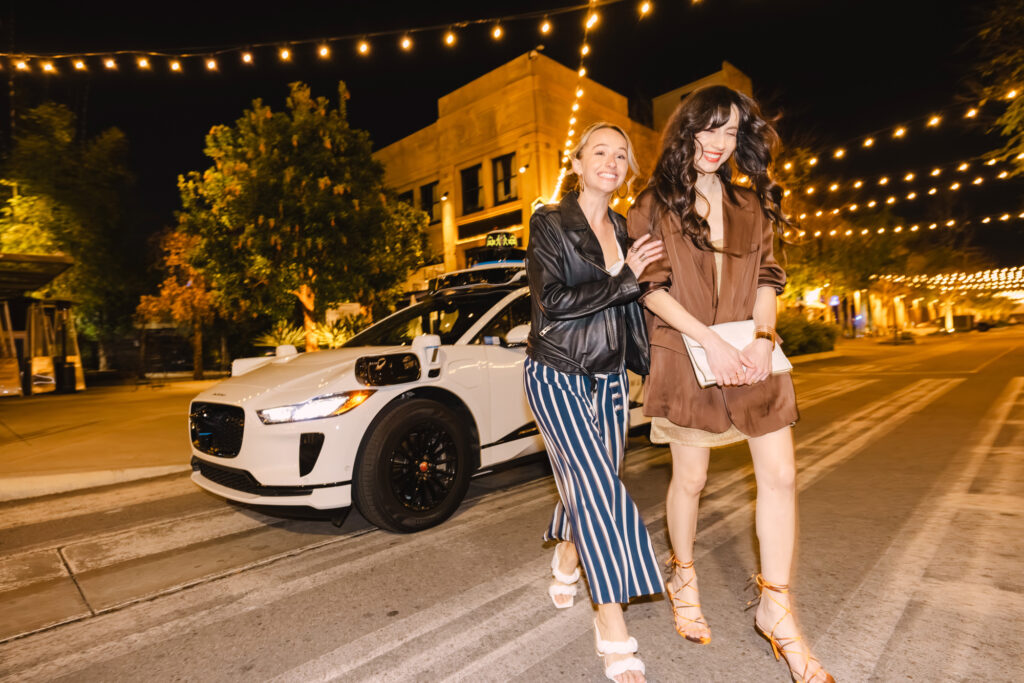
Photo courtesy of Waymo
Technological safety has also been an area of focus for Waymo. “An autonomous car has to be at least 10 times as safe as a non-autonomous car,” Barnett said.
Aware that one accident could result in the loss of a commercial license, AV companies have spent many years testing their products before involving everyday users.
Waymo has been testing for 16 years, and Zoox for roughly 6 years. “You can probably name every fatal crash that there has been with an autonomous car in the United States, because it is front-page news for weeks,” Schnieder said.
AVs could help inter-city transport like Caltrain with first and last-mile rides, which take users from the public transit station to their final destination. “It would probably be a lot cheaper to take Caltrain than it would be to take an autonomous car, and then when you get to San Jose, because they have Waymo now, too, you could take a Waymo at the other end,” Bartnett said. The average Waymo ride in SF is 1.9 miles, demonstrative of the app’s usage for short-distance travel.
Ten to fifteen years down the line, experts predict that average Americans will see a drastically different rideshare market, with Waymo and other AV companies at the forefront. One Yahoo Finance article states that by 2030, Waymo will capture 10% of all rideshare trips in the U.S., compared to just 3.5% in 2025.
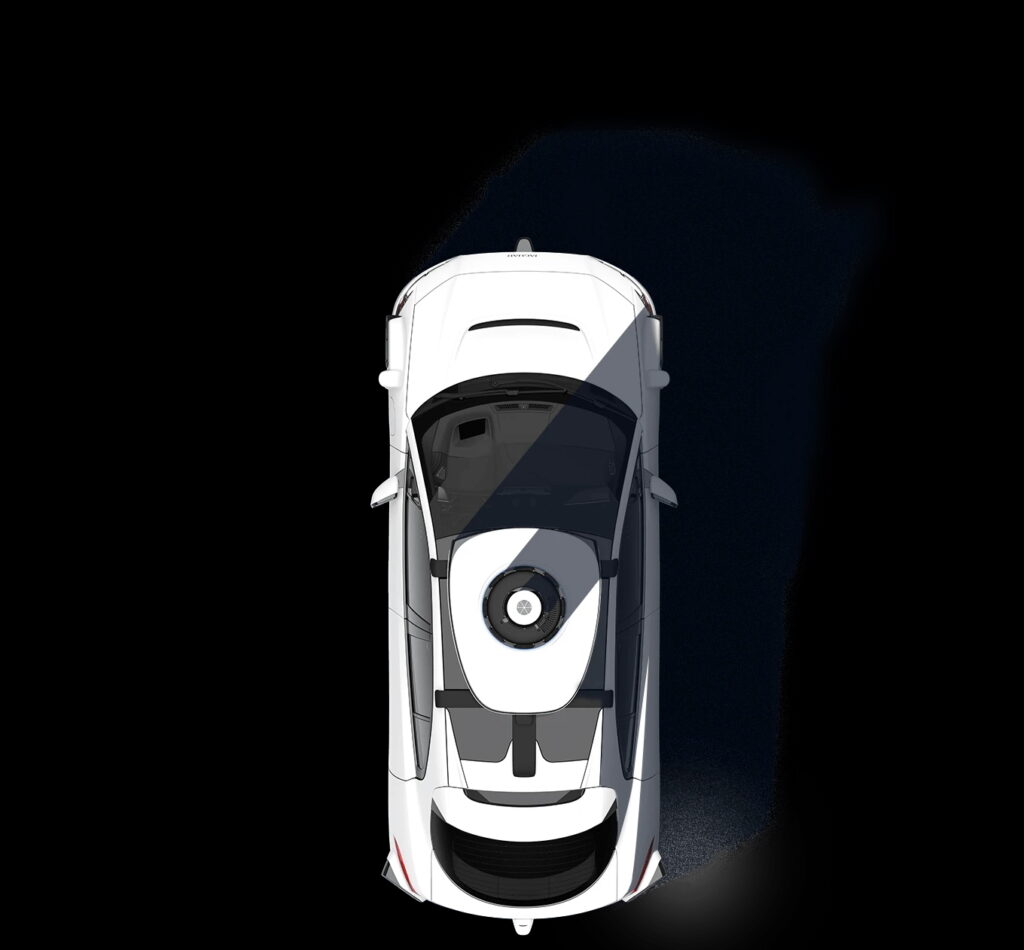
Photo courtesy of Waymo
Although public transit—including SFMTA, BART, and CalTrain—will likely remain popular among users due to their affordability, competing rideshare services like Uber and Lyft may adopt new AV tech that largely eliminates safety concerns. San Francisco, which is leading the charge, has already seen the effects of this innovation, including AVs’ efforts to make city streets safer.
“I have never had a bad experience…I have never had to take over because I felt unsafe,” Fernando Crespo, an avid supporter of AVs and a frequent user of the Tesla FSD (Full Self-Driving but supervised) feature said, demonstrating the safety of modern self-driving technology.