


For decades, cultural grocery stores have been pillars of immigrant and diasporic communities. With headlines recently dominated by stories about Immigration and Customs Enforcement (ICE) crackdowns and xenophobic rhetoric, cultural grocery stores have continued to offer valuable avenues for connection, cultural celebration and community resilience.
“Food is so vital to identity for diaspora communities and for immigrants,” René Villicaña, who teaches the History seminar “Foodways” at Lick-Wilmerding High School, said. “In the Bay Area, we’re super lucky to live in one of the nodes of immigration to the U.S.”
The Bay Area’s vibrancy is reflected by the thriving network of cultural grocery stores that have sustained and shaped its communities for decades. “I think this diversity of culture reflected in grocery stores shows how…immigrants really shape the world around us,” Soluna Ibarra-Tacdol ’26 said.
Immigrants often seek out or establish markets that sell familiar ingredients or where one can speak to employees in their native language. “When you land in a new place, you want to eat foods that are familiar to you,” Villicaña said. “All of those ethnic grocery stores exist because of the history of immigration, displacement and waves of refugees.”
For the descendants of immigrants, these stores allow families to come together over traditional dishes and the memories, holidays and values tied to food. “I think food is such an important way to stay connected to your heritage, and it’s unique in the way that it’s accessible,” Nalin Pradhan ’26 said.
Amidst a political environment that has made many immigrant and diasporic communities feel isolated and targeted, Villicaña emphasized that this connection is more important than ever. “Food is deeply political…In the current climate, there are so many anti-immigrant messages that tell them you don’t belong, you ain’t from here,” he said. “[Cultural grocery stores] become a lifeline, and a really, really important form of cultural sanctuary.”
Nijiya – Nalin Pradhan ’26
Nijiya is a Japanese supermarket in Japantown. Pradhan fondly described Nijiya’s cool air, bright overhead lighting and the Japanese newspapers that line the checkout aisles. These details remain key memories from his childhood.
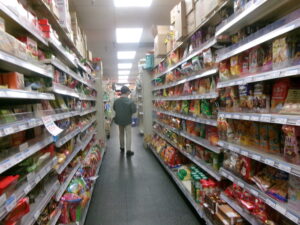
“Especially after Japanese internment, there’s been a huge decrease in Japanese-speaking Japanese Americans, so Nijiya, and Japantown broadly, has been a very important way for the Japanese American community to stay connected to their heritage, since language and other forms of culture have been erased or minimized,” Pradhan said.
Kukje – Benjy Cho ’26
Kukje, located in Daly City, blends a Korean grocery store and restaurant into one communal space. Upon entry, customers are met with a hot food bar and restaurant on one side. On the other, rows of aisles rise high with stacks of Korean produce and snacks.
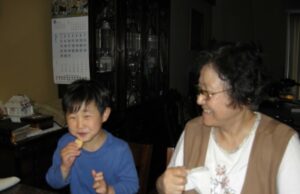
“As a kid, my grandparents would always take me and we would get fried chicken from the restaurant,” Cho recalled.
“For me, it’s always been family…When I walk into the store, or when I hear it mentioned, or when I drive down the highway, I think about my grandma, and I think about her cooking…That’s really meaningful.”
La Palma – Anakarina Moya ’26
La Palma is a family-run Latino grocery store in the Mission, serving a range of hot food, snacks and raw ingredients. The small space is filled with the smell of fresh tortillas, the staple that has made La Palma beloved by many families.
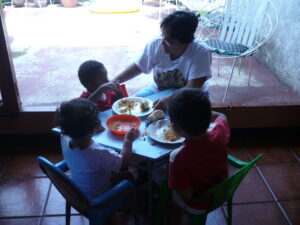
“Every time my grandma brings something [from La Palma] it tastes like home,” Moya described. “We always leave with a bag of chicharrón and a bag of handmade tortillas…You can’t find chicharrón, handmade tortillas or queso fresco at Trader Joe’s.”
“When I enter La Palma, I feel a sense of familiarity…a reminder of grocery stores in Nicaragua,” Moya said.
Seafood City – Soluna Ibarra-Tacdol ’26
Seafood City is an expansive Filipino grocery store in Daly City, with other locations across the Bay Area, serving as a commercial and cultural center for Filipino families like Ibarra-Tacdol’s. Under fluorescent lights, the aisles are filled with Filipino produce—as well as a variety of Asian snacks—that, for many, transform an ordinary shopping trip into a celebration of Filipino culture.
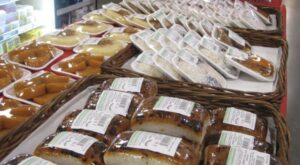
“Food has been a way that my grandparents and my parents really rooted me in my Filipino and Mexican cultures…[it’s] one of the ways that I’ve really taken pride in who I am,” Ibarra-Tacdol said. “They have a live DJ inside the grocery store, and then there’s a dance floor…There was a big lechon, there were kids, there were Lolo and Lolas, grandparents, there were people my age, people my mom’s age…who were partying, and the music was so good…And I also got to see my favorite Filipina rapper when I was there.”
Parkside Farmers’ Market – Sofia Susal ’26
Parkside Farmers Market serves San Francisco’s Middle Eastern and North African communities, offering fresh fruits and vegetables, trays of baklava, rows of spices and grains and imported sweets from the region.
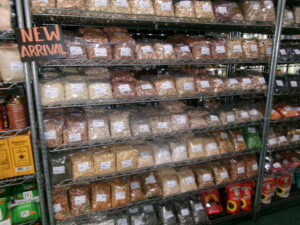
“My family has been shopping there for a long time. I remember going there with my grandma before Shabbat dinner to get spices and Moroccan salads,” Susal said. “It feels more homey [than big chain grocery stores]…the mix of languages and spices makes it feel a lot like my family.”



+ There are no comments
Add yours