



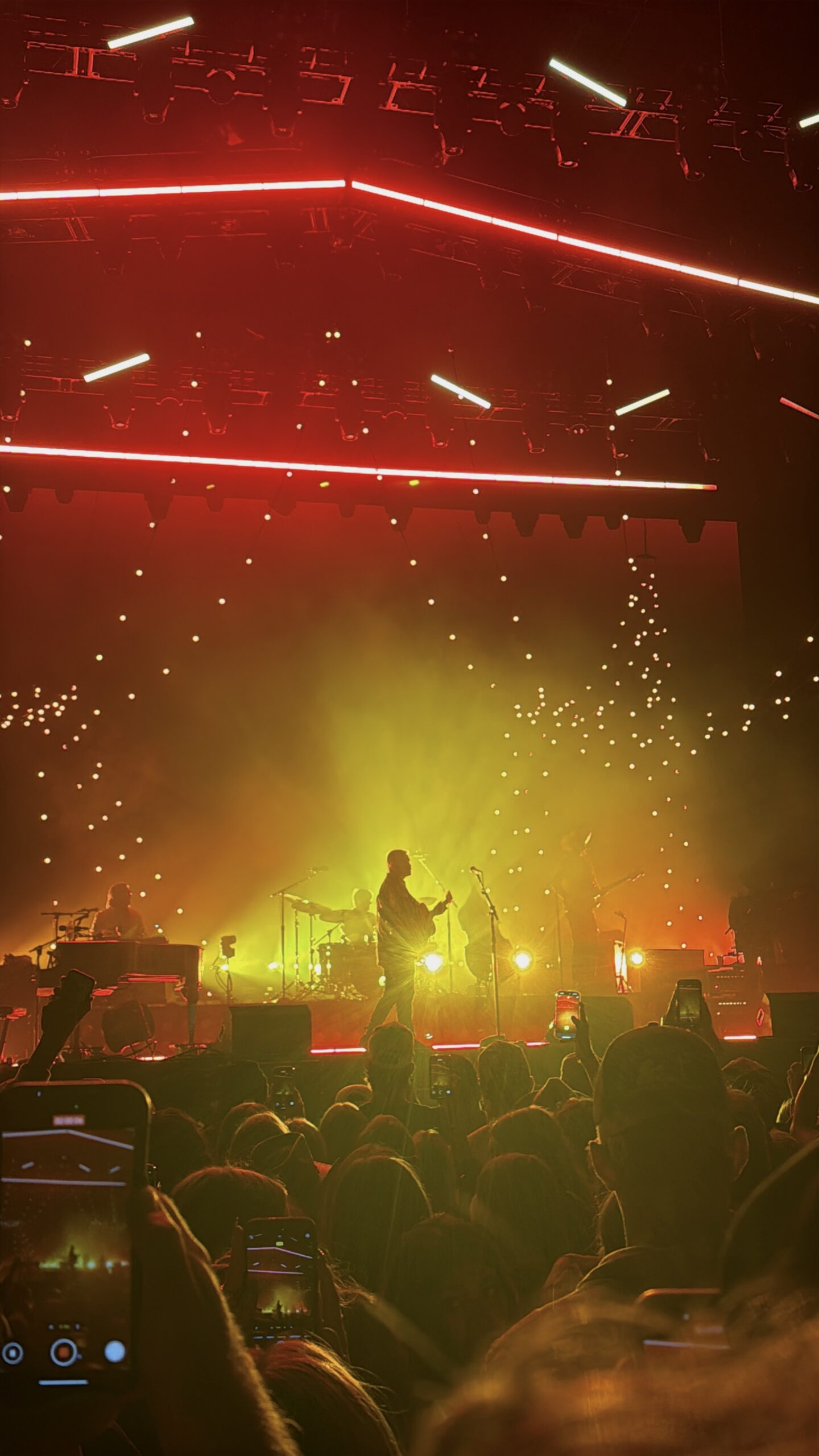
January 9, 2026—With Heaven on Top, country music artist Zach Bryan released his sixth studio album. The release occurred amid intense controversy following his breakup with social media influencer Brianna “Chickenfry” LaPaglia, who alleged that Bryan emotionally abused her throughout their relationship and offered her a $12-million nondisclosure agreement, which she refused. “I’m still scared right now because I’m scared of him,” LaPalagia said in an episode of the podcast “BFFs,” which she co-hosted with Josh Richards and Dave Portnoy. As a longtime fan, this complexity makes listening to Bryan’s music feel heavier, while reopening a timeless debate: can we separate art from artist?
Bryan’s musical fame is built on emotional transparency, something many fans, myself included, can appreciate. Unlike stereotypical “beer and dirt roads” country lyrics, Bryan’s work centers on raw, authentic storytelling. “He’s very open about how he feels and how he sees things. He’s a great storyteller,” Will Day ’28 said.
Bryan’s words illustrate his time serving in the U.S. Navy, heartbreak after his mother’s death, his struggles with mental health and the emotional weight of nostalgia. A deviation from his usual writing, Heaven on Top’s song “Bad News” took a political stance, subtly critiquing Immigration and Customs Enforcement (ICE) raids and the current political administration with the lyrics “ICE is gonna come bust down your door” and “fading red, white and blue,” an unexpected move for an artist with a more conservative fan base. Above all, his songs capture love—imperfect, human love.
It is this humility that made LaPaglia’s claims to emotional abuse especially stand out to me. She described the relationship as a “constant cycle of build you up, beat you down, apologize,” adding that he isolated her from her loved ones and career. Bryan’s music openly expresses his struggle with inner demons, including the emotional toll of navigating toxic relationships. Yet, given the honest, reflective love portrayed in his lyrics, I did not expect those demons to manifest in such a destructive way.
This is far from the first time art has clashed with its controversial creator. Pablo Picasso redefined modern art while allegedly abusing women, describing them as either “goddesses or doormats.” J. K. Rowling wrote Harry Potter, a book series that shaped millions of childhoods, yet has been widely criticized for making transphobic statements. Michael Jackson revolutionized pop while facing severe allegations of child sexual abuse. The list goes on. “I don’t think artists always make good role models, and that’s been true throughout history,” Lick-Wilmerding High School Vocal and General Music Teacher Tony Asaro said.
That said, can we separate art from the artist? The way I see it, yes. However, separation is not the same as letting an individual’s immorality off the hook. Instead, it’s reckoning with the controversy on your own terms—a process that everyone must navigate differently.
My logic lies in ownership. While the artist always owns their work, we own our interpretations of it. We attach our memories and emotions, an assigned meaning that’s only ours. “Art always belongs to the artist. But there is a piece of that art that belongs to the listener when the music is heard. The fact that it finds its way into your heart means it’s become part of you,” Asaro said.
Regardless, separation does not, and should never, excuse wrongdoing. Claiming your personal connection to a work of art does not absolve the artist of responsibility; it simply acknowledges that the meaning the art holds in your life can exist independently from the person who made it. In fact, separating the art from the artist goes hand in hand with consciously confronting the artist’s actions—it’s a responsibility to both honor your experience of the art and hold the creator accountable.
Approaching this commitment looks different for everyone. “I think the closer you are to sharing the identity of the person who made the work, the harder it is to hold that set of ethical questions in front of you,” Shannon Steen, a professor of Media Studies at the University of California, Berkeley, said. Identity and lived experience shape reactions in ways that have less to do with an objective moral ranking and more to do with what the art provokes personally.
For some listeners, flawed or destructive behavior may feel, tragically, human. For others, separation feels morally impossible. “[Bryan’s] songs would be terrible if he were singing about getting good sleep and never drinking,” Day said, pointing to the idea that imperfection can be part of what makes art relatable and compelling.
Understanding one’s personal reaction to flaws presented in art raises its own question of where artists’ darkness comes from in the first place. Addiction and mental health struggles, for instance, have long shadowed the music industry. While they do not vindicate artists of harm, they add context to how we understand it. “Some of the most troubled people make some of the most beautiful art,” Day said.
It is also worth reckoning with the intersection between private connection and real-world consequence. Even if separating art from the artist feels manageable on a personal level, engaging with that art can still carry real-world implications. “Are you enfranchising…or paying for ongoing unethical conduct?” Steen said. Streaming services generate revenue, however small, while concerts, merchandise and publicity can boost both income and influence. “You think about putting your money where your politics are,” LWHS Instrumental Music Teacher Jason Gillenwater said. Ask yourself whether you are following the art, the creator or both—and what that choice means.
At the end of the day, art is about connection. “You have connected to something very human in their art,” Asaro said. “My relationship to the art is mine. When you listen to a song, and it’s meaningful to you, that’s yours.”
We can separate art from its artist, but that does not mean we should do so blindly. The choice is ultimately personal, which is precisely what makes the question so heavy. In my opinion, someone else’s injustice should not dictate how you connect to art. Instead, it should push us to reckon with the systems that lead artists, or anyone, to inflict harm in the first place.
Regarding my connection to Bryan, his songs still find a home in my heart. Though listening to his music now carries new weight, I can acknowledge its impact on my life and confront the harm he caused by choosing to celebrate his art, not its artist. We should never be bystanders to immorality, but do not starve yourself of great art.





+ There are no comments
Add yours