



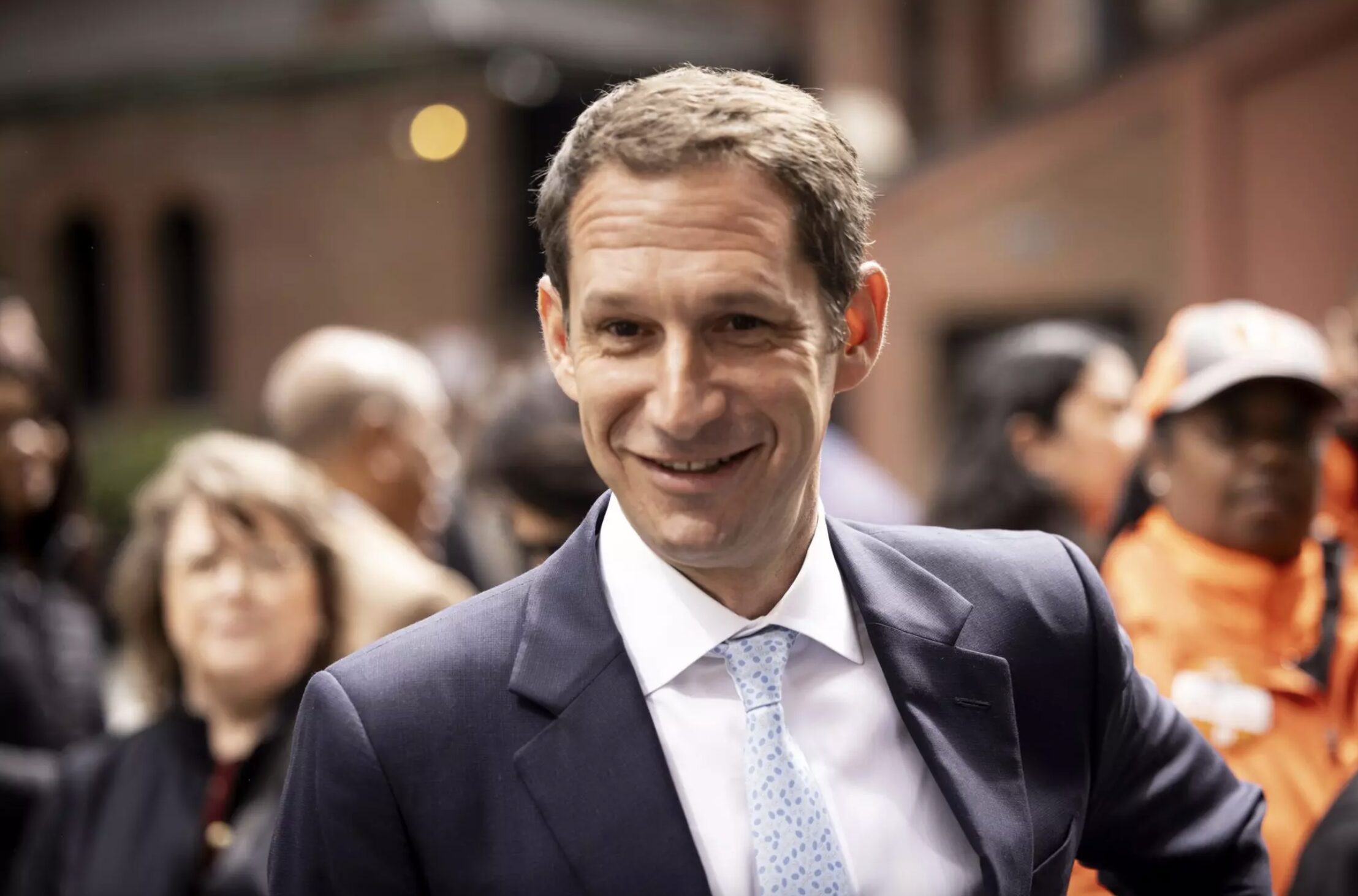
Scrolling through TikTok or Instagram as a San Franciscan, it is hard to miss Daniel Lurie. Since taking office in January 2025, the mayor has garnered over 220,000 followers across social media platforms, posting short-form videos ranging from city policy to local businesses. For young residents—including Lick-Wilmerding High School students—this content has become part of their daily feed, translating to a deeper understanding of Lurie and local politics.
During his 2024 race, Lurie leveraged various online spaces—including TikTok, Instagram, Facebook and X—to spread his campaign’s mission.
“The media landscape has changed a lot, and we saw [social media] as a great way to reach as many people as possible, especially average San Franciscans and people who weren’t as clued in to politics,” said Haakon Black, communications and digital assistant for Mayor Daniel Lurie.
Despite their short-form nature, the videos provide viewers with a more well-rounded understanding of Lurie’s vision for the city. “What his Instagram does for me is less about specific policies and more about the general mission and what he’s working towards as mayor,” Lila Kangelaris ’26 said.
Lurie’s decision to embrace video-based media as a means of political communication is not unique. In the 2024 presidential election, Americans nationwide observed as former Vice President Kamala Harris and President Donald Trump leaned on digital media and advertising as an essential way of reaching voters. However, their high-production videos, complete with lighting and professional cameras, often lacked a key feature of Lurie’s: authenticity.
“The success of the social media is entirely his…he’s so comfortable talking to a phone and I think that really resonates with people,” Black said. “It’s very authentic and it’s very real to him.”
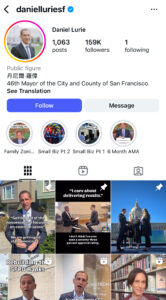
photo by Ruby Kilar ’26
For many, this approachability is what initially grabbed their attention. “A lot of politicians feel very distant…and Lurie’s social media has a cool way of bringing people together,” Gavin Cameron ’26 said. “You can tell he grew up in SF…he knows the city.”
In many of the sub-60-second videos, Lurie can be seen walking the streets of downtown, discussing some of the city’s most pressing issues: public safety, empty storefronts and affordability. Often, this content prioritizes highlighting city initiatives and policy actions rather than garnering views or engagement typical of a social media presence.
“When I turn on CNN, for example, there’s sometimes a fear catch…it’s all the scary things and they hook you that way. I don’t think [Lurie’s] necessarily doing that, and I think that’s a good thing,” Finn McDonald ’26 said.
“When our first responders can live in San Francisco, our city is that much safer. Right now, we have an affordability crisis, and the family zoning plan that I have put forward is going to help increase the supply of housing, making sure that our firefighters and our police officers, our teachers, our nurses, have an opportunity to live in the place they work…I am proud to announce that the firefighters and police officers have stepped in support of this plan,” Lurie said in one video.
In addition to being solution-oriented, Lurie’s policy-based videos give careful consideration to the audience, acknowledging their varied levels of prior knowledge. “It’s not always super nuanced information about every single step that he’s taking…but it helps me feel updated and informed,” Kangelaris said.
Lurie is also keenly aware that users are not necessarily turning to social media to be inundated with news. According to a 2024 study conducted by Pew Research Center, 41% of TikTok users said their primary reason for using the app was “to get news.” With numbers like these, building a following based solely on policy-focused content can be tough.
To offset this, Lurie has intentionally curated a portion of his feed to directly highlight San Francisco culture: entertainment, food and the city’s happenings. While coffee runs, music festivals and sports games certainly do not dominate Lurie’s time, they allow his followers a more personal look into his daily life.
“The culture-focused videos are things you wouldn’t typically see from a politician. With any traditional legacy media, you get all the policy stuff…but it’s also nice to see the mayor is actively engaged with the community he represents,” Cameron said. “Someone’s got to give a raise to his driver, because he’s all over the city at once.”
However, his communications team remains cognizant that his social media presence must be accurate and reflective of his role as mayor. “We can’t just post him doing all of the fun stuff because that’s not what he’s doing…he’s not just grabbing coffee all day,” Black said. “He’s also doing important things that we want to communicate…whatever the mayor is doing, we will build a strategy and content off of that.”
Regardless of the video’s focus, many viewers agree that his content differs from that of previous San Francisco politicians in both style and substance. “I’ve never seen a San Francisco mayor or politician have this kind of social media presence…I appreciate it,” McDonald said.
Mayor Lurie’s embrace of social media, while nontraditional, has opened City Hall’s doors to anyone with a phone. “We want to talk to San Franciscans,” Black said. Even though his minute-long videos vary in focus, they have allowed audiences—especially youth—to feel a stronger connection to the city and its leadership.
“I feel more connected to San Francisco politics in a way I haven’t in the past,” McDonald said.