



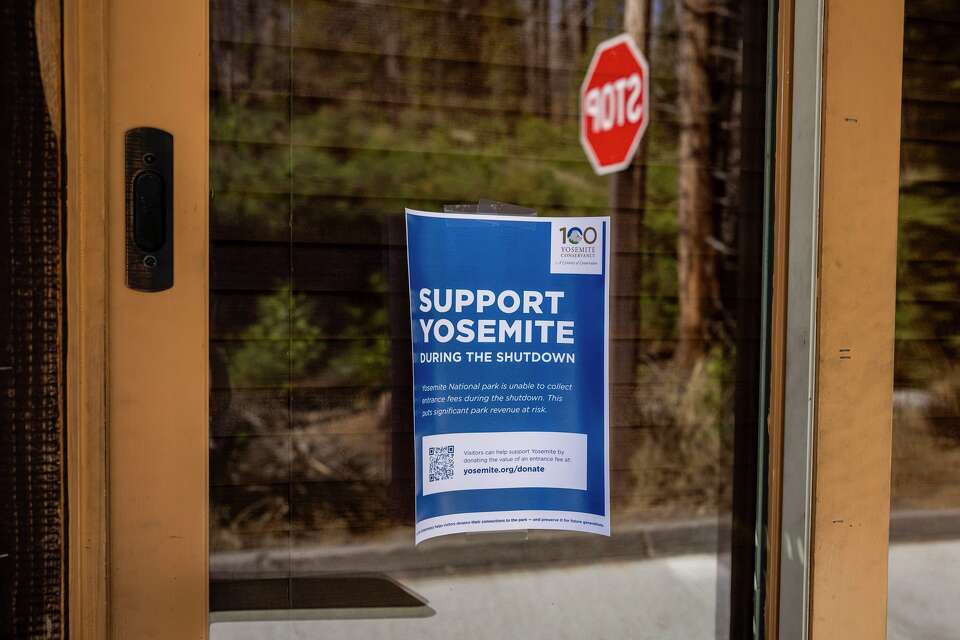
When the federal government shut down on October 1st, national parks across the country became drastically understaffed and underfunded. For 43 days, more than 67% of National Park Service (NPS) employees were furloughed, most temporarily discharged from their jobs. The NPS estimates that parks lost nearly $44 million in revenue, and one month after funding returned, many are still struggling to find their footing as the impacts of the shutdown loom large.
The extensive U.S. national park system includes 63 national parks along with over 430 total federally protected sites throughout all 50 states and U.S. territories. Most notably, these include Yosemite National Park and Muir Woods, the latter only 12 miles north of San Francisco and the Golden Gate Bridge. The parks began with Yellowstone National Park in 1872, and the NPS has grown and evolved over more than 150 years to protect America’s natural and cultural heritage.
A shutdown does not force parks to close entirely, as they may remain open to the public with very limited staffing. In 2025 the 67% of workers stated to be furloughed included rangers, maintenance crews and ecologists. Letting these workers go first leads to pausing ecologists’ research work in the parks. Then, the absence of rangers leads to overflowing trash cans and unclean restrooms, disease and general unhygienic conditions in parks, with detrimental impacts.
Safety concerns not only include the facilities of the park, but also the potential actions of unsupervised individuals. Kai Scott ’26, who works at Angel Island State Park, recalled dangerous stories. “[I] saw a lot of reports of BASE jumping in Yosemite,” Scott said. BASE jumping is jumping off fixed objects—like Yosemite’s El Capitan, a large, granite sheer cliff —with wingsuits and without parachutes. Due to its dangerous nature, BASE jumping without a permit in a national park has been illegal since the 1980s.
Scott, who as a lifeguard is a first responder, also recounted how outside state help took place during the shutdown. “There was a climber who fell on [El Capitan] during the shutdown, and a California Highway Patrol helicopter was the one who pulled him off the side of the mountain,” he said. The damage is threefold: cosmetic, personal and ecological. A lack of supervision not only leads to self-inflicted harm suffered by people but also poses threats to the ecosystem. Without the instruction of park employees, visitors are able to walk in restricted areas, disturbing ecosystems by potentially exacerbating pre-existing concerns like erosion.
More than 35 former park superintendents, including leaders from Yosemite, Joshua Tree and Sequoia, anticipating a funding lapse similar to the one in 2019 during the first Trump administration, urged the administration to close the parks altogether if staffing became insufficient. Their letter warned of “chaos,” even more detrimental to the parks’ well-being than the Department of Government Efficiency’s (DOGE) federal worker cuts, which eliminated 25% of the parks’ permanent staff.
Doug Burgum, the current Secretary of the Interior, ignored these warning letters and kept national parks open. Former NPS leader Johnathan Jarvis, who closed all parks when he was faced with a shutdown in 2013, was reported to have said, “[Burgum is] putting basically these irreplaceable resources at risk,” in response to Burgum’s inaction.
Other leaders in the national park space, such as Theresa Pierno, President and CEO of the National Park Conservation Association (NCPA), have also feared the repercussions of the shutdown. “Our national parks have never been more at risk. If we don’t act now to stop these senseless staffing cuts, this could mark the beginning of the end for the parks as we know and love them,” Pierno said in a NCPA statement.
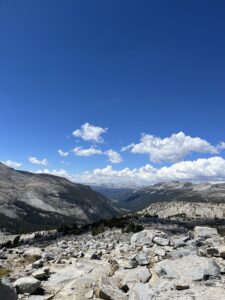
photo by Hugo Loeb ’26
Despite these challenges, young people can still make a real difference. Sachin Datar ’27, Environmental Co-Chair and Wilderness Club Leader, rehashed a simple rule of thumb that all park visitors can practice. “Leave No Trace,” he said. Put simply, take out what you bring in, stay on trails and respect wildlife. Raising awareness and general vocalization are equally important. “Stay informed about the parks, especially if you’re interested in them,” he said.
Aside from being conscious and educated park visitors, Datar also proposed volunteering as an accessible way to provide support following the shutdown. “You can go to the National Park Service website and volunteer for a day, week or year,” he said. As many workers return from furlough, it’s suggested that morale would be low, and an influx of volunteers could revive park spirits.
National parks will continue to face challenges, yet remain essential parts of our country. Helping these natural environments and their protectors means that future generations will still be able to stand on a mountain at sunrise, hear birds in an ancient forest or see the stars over a quiet canyon.