



The first American professional women’s baseball league in 71 years shatters the ceiling for girls who play baseball and provides a new perspective on women’s opportunities in the sport.
The Women’s Professional Baseball League (WPBL) was established in 2024 by Keith Stein and baseball icon Justine Seigal. Seigal was the first woman to manage a professional men’s baseball team and the first woman to throw batting practice for a Major League Baseball (MLB) team.
The WPBL’s inaugural season is set to begin in August 2026 and will run for seven weeks.
For four weeks, each team will play two weekly games, and the season will culminate with a one-week All-Star break and a two-week-long playoff round. The WPBL had its draft on November 20, 2025, with four starter teams based in San Francisco, New York, Boston and Los Angeles.
The All-American Girls Baseball League (AAGBL) existed from 1943 to 1954 as a way for baseball parks to keep busy during World War II. It was a smash hit, garnering around 1,000,000 fans at its peak in 1948, with over 600 players competing over 12 seasons. However, as male players returned from war and the popularity of TV rose, the league lost viewership and disbanded in 1954.
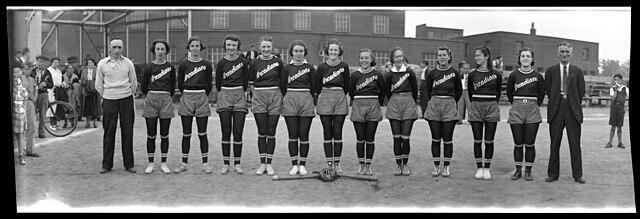
photo courtesy of Wikimedia Commons
Since then, girls’ baseball has existed in the form of clubs, like the Bay Sox here in the Bay Area; organizations like Baseball For All—founded by Siegal—and professional tournaments, such as the Women’s Baseball World Cup. The WPBL seeks to provide a professional, competitive forum for women’s baseball players.
Despite the limited opportunities, girls’ baseball has been on the rise. “I think when I was a freshman, all the seniors, most of the older kids mostly came in playing softball, and I came in playing softball, but I’ve noticed a lot more girls come in playing baseball, or that was their previous experience with the sport,” Stella Luongo ’26, a co-captain of the Lick-Wilmerding High School softball team, said.
According to the annual High School Athletics Participation survey by the National Federation of State High School Sports, in 2009, 55 schools offered girls’ baseball programs. That number has risen dramatically. In 2024, 1,342 schools offered girls’ baseball programs.

photo courtesy of Wikimedia Commons
Club participation shows similar trends. “They expanded the age groups. When I joined, it was tiny. I didn’t start by joining the team…It was actually just clinics,” Mia Fung ’27 said. Fung played on the Bay Sox when they were younger, an organization that now reports over 120 members across the Bay Area. “I think playing on the baseball team was super empowering,” they said.
Many girls play boys’ baseball when girls’ baseball isn’t available, but they may face challenges. “It did feel like we were separated from the rest of the team. Obviously, a lot of the guys were really welcoming…But I did feel like there was a kind of gap,” Fung said, commenting on her time playing on the boys’ baseball team at LWHS. “You get to see how awkward it is to be like a different player.”
Playing time can also be an issue on co-ed teams. “The truth is that the girls, unless they’re exceptionally good, don’t get equal playing time…even the girls who were on softball and they got so much playing time, and then they went to baseball, and they’re benched or subbed in after the win is guaranteed,” Mika Omachi ’26 said, the other co-captain of the LWHS softball team.
According to some, the learning environment on the field is also different. “I love playing with other girls…they understand a little bit more,” Rio Alcantar ’29, who is a proponent of girls’ baseball, said. “Baseball is about failure, and sometimes it’s better to talk about it with an all-girls team than being the only girl on the field and failing.”
The WPBL solves many of these issues. Women who want to play baseball get to play, surrounded by female teammates and have a more equal shot at playing time. “I think it’s good to create opportunities specifically for women to create more space,” Luongo said. “It’s really nice to have a space just for girls.”
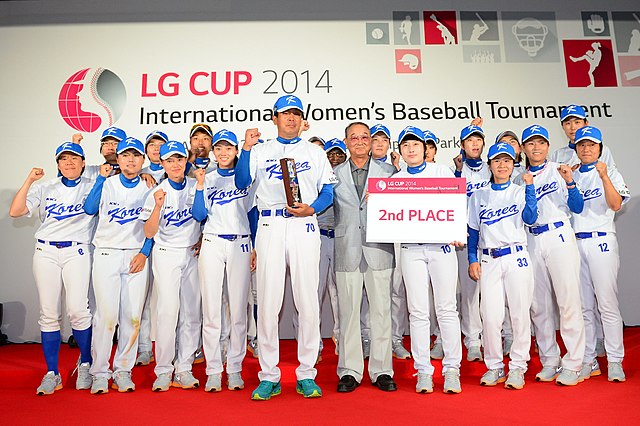
photo courtesy of Wikimedia Commons
This league also creates new possibilities for women to play professionally, which were previously unavailable. “I think now that we can see Major League women’s baseball is amazing,” Fung said. “This makes me so happy, because it’s something that actually has become a reality.”
Those who want to get a chance to play professionally. “I think that this league will be better because it’s a little bit bigger, and you know, you’re playing professionally,” Alcantar said. Alcantar is very committed to girls’ baseball and wants to go very far.
These experiences can be deeply important for young players. “I mean, that was a great way for me to get introduced to the sport,” Fung said concerning her time on the Bay Sox.
The WPBL is also a source of inspiration for many. “Some of [the WPBL players] have similar stories to me…seeing how they push through, and how they can make it, and being in the league is also a really cool thing,” Alcantar said.
The new WPBL creates more opportunities for women and girls to play the sport they love: baseball. The league is fresh, exciting and changes how players as well as audiences view women on the field.
Instead of softball being the baseball for girls, now baseball is just baseball.