
On October 30, 2025, San Francisco officials notified Bayview residents that airborne Plutonium-239 had been detected by the Navy at Hunter’s Point Naval Shipyard in November 2024. With the land slated for real estate development, the radiation raised concerns for residents about other contaminants in the soil and the impact of planned construction on community health.
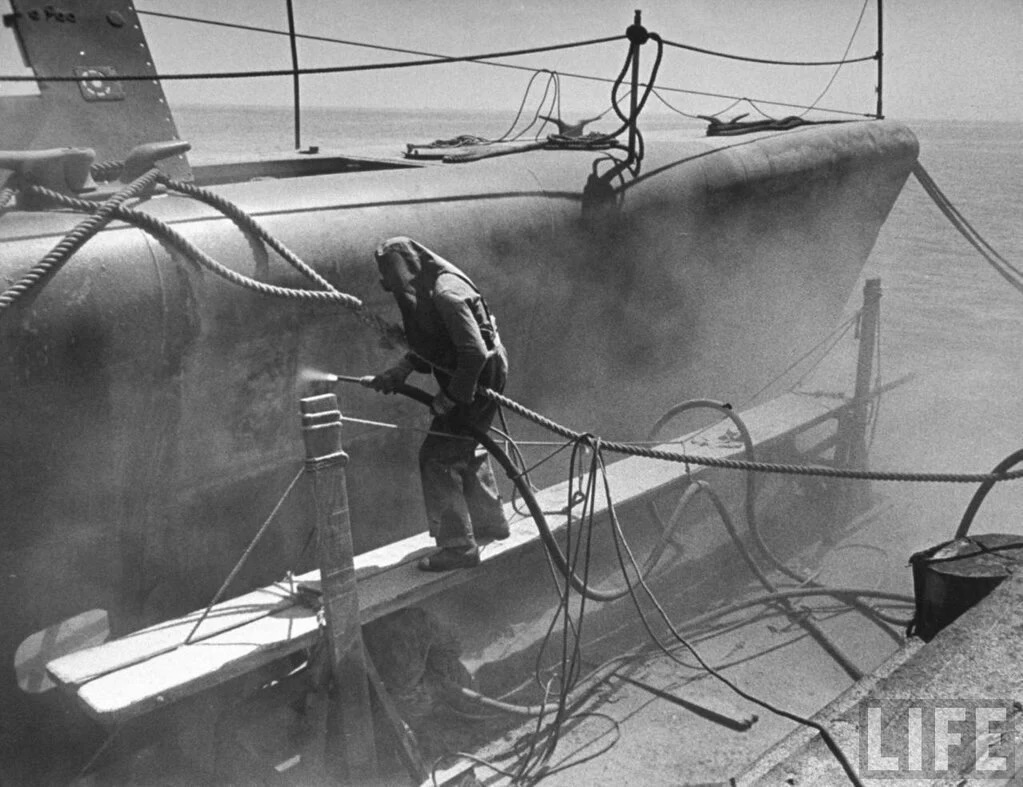
Hunter’s Point Naval Shipyard, bought by the Navy in 1939, became a hub of radioactive testing during the Cold War. Ships used in the Bikini Atoll tests were transported to the Bay Area and sandblasted to decontaminate them. The shipyard also housed the top-secret Naval Radiological Defense Laboratory. In 1974, the shipyard ceased operations, officially closing in 1994.
The shipyard is a Superfund site, a designation given by the U.S. government to denote the most contaminated areas in the country. In 2006, the Navy hired Tetra Tech EC Inc. to clean up the site, which is split up into different sections called parcels. Since then, lawsuits have been filed against Tetra Tech, claiming fraud and improper decontamination methodologies. ‘Parcel A,’ formerly administrative residences and offices, was transferred to the city for housing development in 2004.
BradleyAngel, the Executive Director of Greenaction, a non-profit organization that works to change government and industry policies to combat environmental injustices and promote better health, shared his issue with the Navy’s planned cleanup. “It relies, in part, on putting a cap on top of the toxic and radioactive waste at the shoreline of San Francisco Bay, where it will eventually be underwater,” he said.
Capping is the process of putting concrete over the contaminated material and then placing a topping layer of soil. However, as the water level rises, there is the risk that capped contaminants will leak into the watershed and bay, potentially risking the health of residents.
City officials and residents are concerned that it took nearly a year for the Navy to reveal these findings. The radiation levels tested in November of 2024 were double the recommended amount and exceeded “Action Levels,” where the government must step in to investigate, yet experts still considered them “unharmful.”
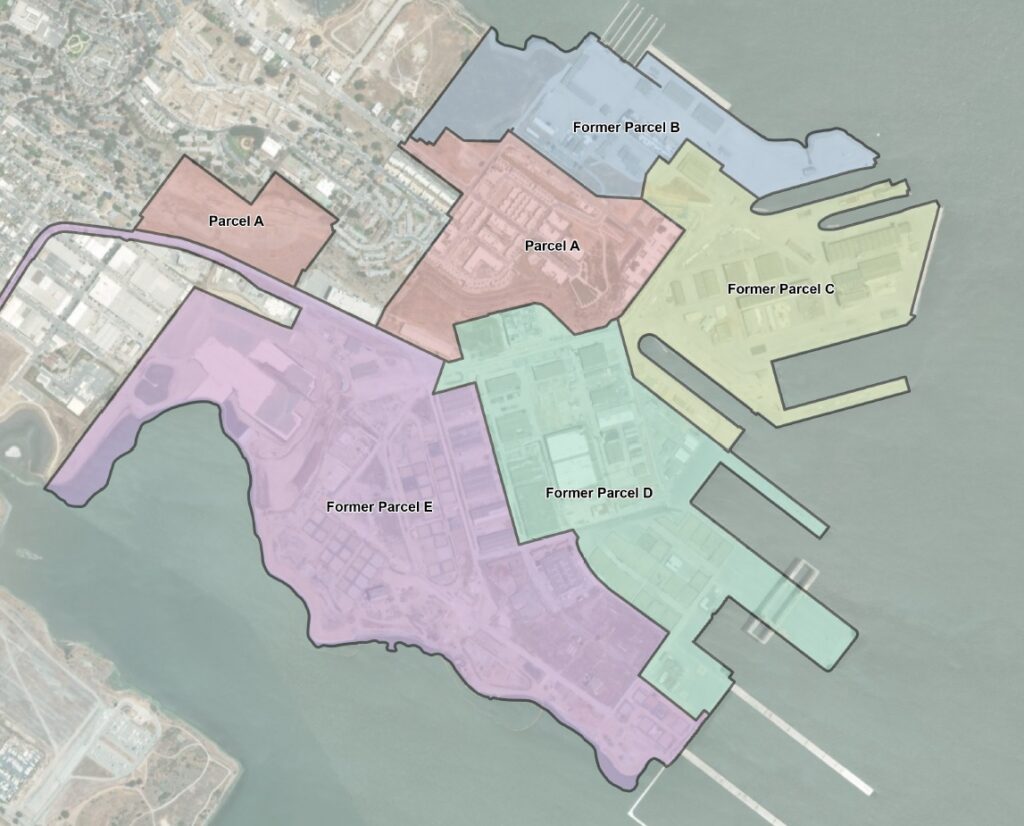
photo courtesy of the San Francisco Government
However, the finding points towards a wider issue of environmental injustice, as 92% of Bayview residents are people of color. During WWII, the population of Bayview rapidly increased as thousands of workers came for the new shipbuilding jobs supporting the war effort. Many of the workers were African Americans who became permanent residents of the area following the war. By 1950, 44,000 African Americans lived in San Francisco, up from 5,000 just ten years prior. Nowadays, residents have to contend with pollutants released by the mass amount of industry in the area. Bayview has increased rates of asthma, cancer and low birth weights.
Dr. Hollis Pierce-Jenkins, the Director of Literacy for Environmental Justice (LEJ), commented on issues residents face. “The health implications of this community are continuing generationally. Bayview has the largest number of children, but those children are below the poverty line. A lot of grandparents are raising their grandchildren, and they’re really struggling financially and mentally,” she said. Her team at LEJ works with the San Francisco Recreation and Parks Department to restore native plants to habitats along San Francisco’s coastline on the Bay. This includes restoration at Heron’s Head Park, where Lick-Wilmerding High School ninth graders travel to and volunteer every year, just north of Hunter’s Point Naval Shipyard.
“There are parts of that area that are not safe, so we had to stop our restoration work at Yosemite Slough,” Dr. Pierce-Jenkins said. Yosemite Slough is located in the northern section of Candlestick Point State Recreation Area (CPSRA). “I’m not going to put our staff at risk working in places that are not safe. And so if the authorities are telling you it’s safe, but you can’t trust them, it makes it so I have to be very aware of what the risk factor is, the reality of what’s in the ground.”
LEJ, in addition to land restoration, and with the permission of community advocates, has placed air quality monitors around its operation site at 1150 Carroll Avenue at the edge of CPSRA. In the past, LEJ interns have partnered with San Francisco State University (SFSU) students to collect soil samples for heavy metals at various locations around Bayview and analyze them under the supervision of SFSU. LEJ is part of a larger movement to improve ecological and public health. In 2006, community activists shut down the PG&E Powerplant in Bayview that was contributing to air and soil pollution.
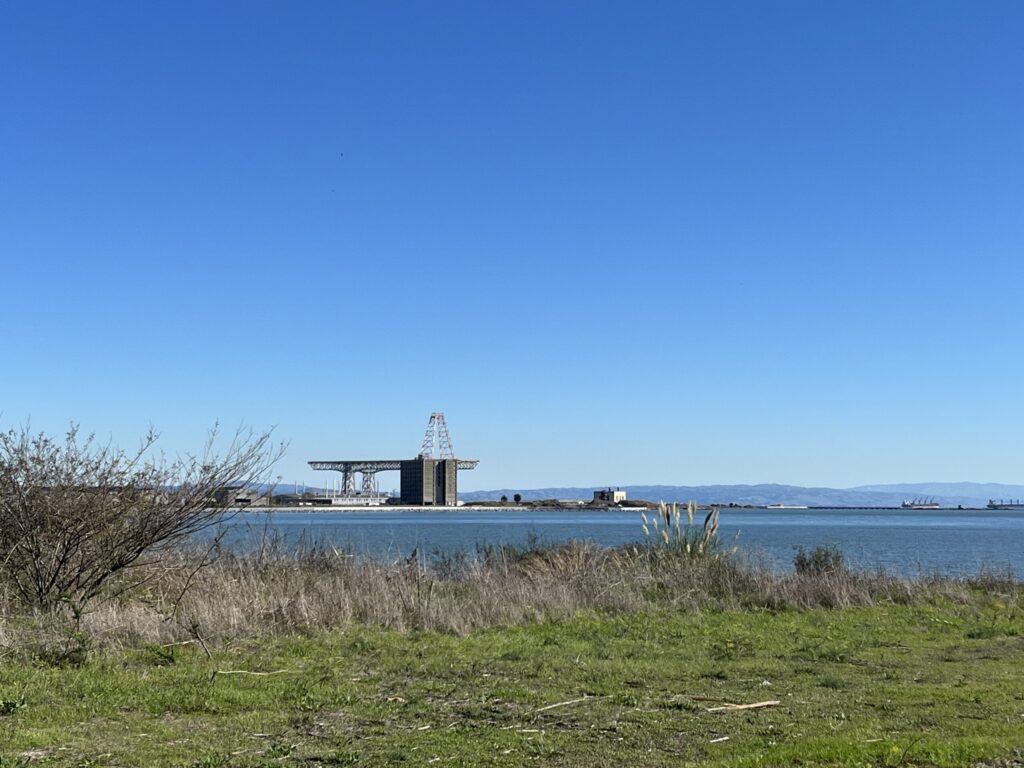
photo by Hugo Loeb ’26
People outside Bayview are also necessary to create change. Antonio Moreno, an indigenous gardener who is culturally affiliated with the Costanoan (Ohlone) people, has worked with LEJ and offered his thoughts on how residents of the Bay Area can be more environmentally aware. “Relationships with the living Earth can be created from just intention and thought,” he said. “Be conscious consumers, focus on green bins and recyclables to create that relationship.”
“A real relationship of reciprocity can be achieved by realizing we are our Mother Earth’s children, and have a responsibility to reestablish a healthy connection with her,” he said. “This real connection can guide us to a balanced place of consciousness in our lives, regarding how we treat and care for Earth Mother and for future generations. If we do not think of future generations, we are missing the point.”
The Navy plans to complete “remediation” (decontamination) at the Hunter’s Point Naval Shipyard by 2036. Until that happens, Bayview residents continue to fight for the removal of contaminants and restoration of the environment to make a healthier future for everyone.