



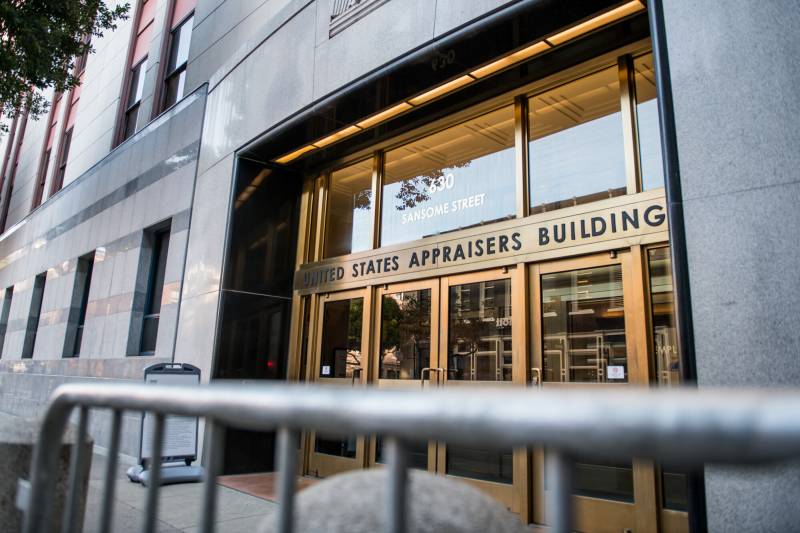
In January 2025, 21 immigration judges presided over hearings at the San Francisco Immigration Court at 100 Montgomery Street. By March 2026, only two remain. The rest have either been fired by the Executive Office for Immigration Review (EOIR), retired early or left their positions, and the court itself is slated to close in January 2027. This drastic reduction in judicial capacity will create severe backlogs, delay hearings and leave immigrants and their families in prolonged legal uncertainty.
The EOIR, which operates under the direction of the Trump-influenced Department of Homeland Security, carried out these firings as part of a broader effort to restrict immigration facilities, resources and protections—actions that have afflicted countless immigrant communities with widespread fear and uncertainty.
At the beginning of 2025, 700 immigration judges presided in courts across the country. As of March 2026, the Trump administration has forced out or removed more than 100 of them, with this effort heavily concentrated on San Francisco—a city widely recognized not only for its liberal politics but also as home to a vast and deeply rooted network of diverse immigrant communities.
Among the judges dismissed from the San Francisco Immigration Court is Amber George, who had presided over the court since 2020. She expressed concern about the impact the lack of resources will have on immigrants. “People’s cases are not going to be heard now for many more years, and it’s uncertain if they will ever be heard,” George said.
Judge George presided over 1,000 asylum cases, the primary case type that takes place at San Francisco’s Immigration Court. In asylum hearings, non-citizens argue their case for citizenship and protection in the U.S. These cases are decided based on proven or potential risk of persecution in an immigrant’s home country.
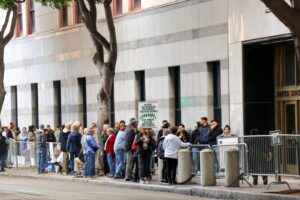
photo courtesy of Mission Local
Lack of developments in asylum cases leave potential citizens stranded, unable to advance their applications for citizenship. This helplessness heightens the risk of detainment and deportation—a threat amplified by the Trump administration’s twofold increase in funding for Immigration Customs Enforcement (ICE) officers.
President Donald Trump entered office in January 2025, promising the largest mass deportation effort in U.S. history, targeting the more than 10 million undocumented people living in the U.S. In his first term, his administration made 470 changes to federal immigration policy, followed by over 500 in his second term. These actions have focused on restricting asylum, expanding detention and accelerating deportation processes.
“People stopped showing up to their immigration hearings because they were afraid of being whisked away by ICE,” George said. “The fear that immigrants are feeling everywhere is very, very very significant.”
Immigrant advocates say these delays are not accidental, but rather are a part of a broader strategy. Valentina Ozbek, Director of the Immigration Institute of the Bay Area, which helps connect immigrants with resources and legal services that help them navigate citizenship attainment, echoed this concern. “I think the administration deliberately sows fear in order to chill individuals seeking out their immigration benefits that they are entitled to,” she said. “People feel like, ‘Right now is not the time for me to access these rights,’ even though some of them are still available…and I think that’s by design.”
The changes happening at the San Francisco Immigration Court are a symptom of broader systematic change: targeted repression of immigrants’ avenues to citizenship not only increases their risk of deportation, but makes it more difficult for them to realize their right to due process. Increased ICE presence, legal obstacles and political volatility create conditions that leave immigrant families stranded.
Constant changes in federal policy have also crippled immigration institutions’ ability to consistently serve their communities. “We are constantly bombarded with changes in immigration policy, which has slowed down our ability to serve our clients,” Ozbek said.
Both the removal of judges and the closure of the court will make it exponentially more difficult to navigate the path to citizenship. Ultimately, the lives of immigrants, already a vulnerable and underrepresented community, will become significantly more difficult and uncertain.
“It doesn’t matter whether they came in illegally. It matters that if they have a case—their case is supposed to be heard,” Judge George said. “These are life and death situations for asylum seekers. For many of them, their only hope was being able to have their case heard in court.”




+ There are no comments
Add yours