

Last month, lead scientists and bioethicists gathered from around the world for the Cell and Gene Therapy Symposium in Southern California to discuss the ethics and scientific advancements in genetic engineering. At the forefront of these conversations were cutting-edge tools like CRISPR-GPT, a study published in Nature Biomedical Engineering in July that details an AI-powered “copilot” for genetic research, which may help to design precise therapies in months, rather than years. However, enthusiasm for new scientific advances was quickly tempered by concern as ethical questions arose surrounding the use of these genetic code-editing tools.
Bringing these global conversations into the classroom, Lick-Wilmerding High School has recently introduced a new hands-on class to its catalog— Honors Biology: Science Research Fly Genetics PPP. Taught by Christine Wilkinson, this year-long lab course centers around the genetic engineering of fruit flies, in collaboration with biomedical researchers at Stanford University. Students learn core molecular biology skills, such as DNA extraction and gel electrophoresis and apply these techniques to analyze genetic modifications. The course is designed to mirror college-level genetic research, offering a rare opportunity for high school students to contribute directly to a field that is evolving as rapidly as gene editing itself.
How CRISPR Actually Works
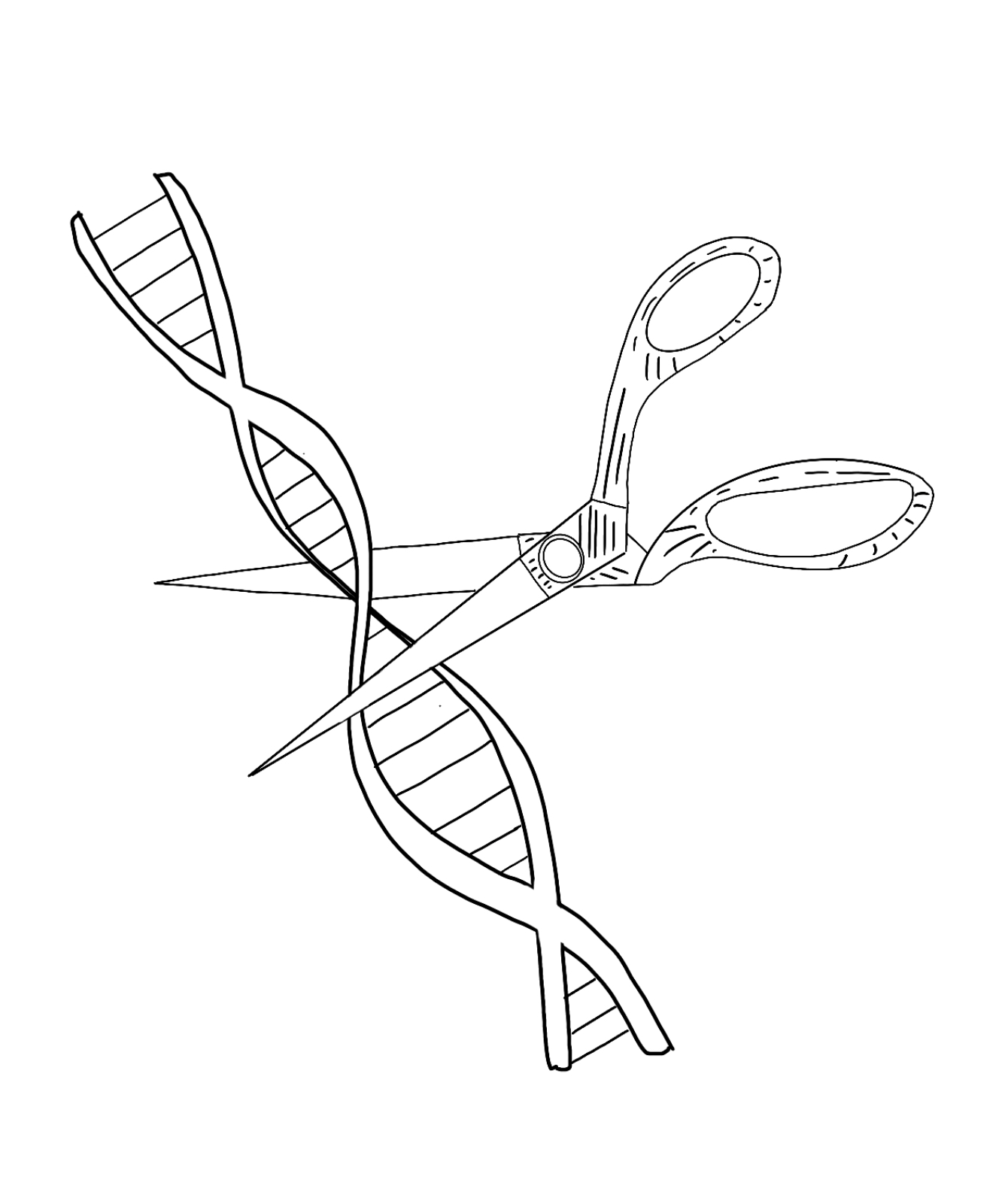
To evaluate the stakes, it is essential to first understand the technology at the center of these debates. Clustered Regularly Interspaced Short Palindromic Repeats (CRISPR) is a natural defense system found in bacteria that scientists have adapted into a precise gene-editing tool. One key component of the system is the Cas9 protein, or what scientists often call “molecular scissors.” Guided by a small piece of RNA, Cas9 locates a specific spot in DNA and cuts both strands, allowing geneticists to disable or modify genes at that location.
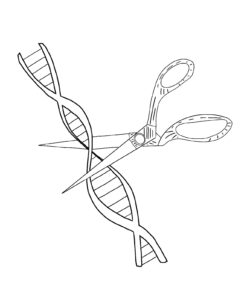
CRISPR technology’s main function is creating a double-strand break in the DNA, but scientists have learned how to coax the cell into repairing that break in a specific way. By adding a piece of donor DNA, or a repair template designed in the lab, researchers can direct the cell to insert or correct genetic information at the targeted site. This process allows CRISPR not only to disrupt genes but, in some cases, to rewrite them.
Even so, Dr. Maria Gallegos, genetics professor at California State University, East Bay, emphasized that editing with CRISPR-Cas9 is not as straightforward as it sounds. “People think CRISPR can do anything, but really, all it does is make a targeted cut in DNA. It’s powerful, but it’s messy…the cell has to repair that break, and sometimes it does so in unpredictable ways,” she said.
Advancements in CRISPR Treatments
The U.S. Food and Drug Administration’s (FDA) recent approval of CASGEVY in late 2023, the first CRISPR-based treatment for sickle cell disease, marked a historic milestone in cell therapy. Patients treated with edited cells have shown durable, life-saving results, proving that gene editing is no longer “future technology” but instead, present-day medicine.
According to Gallegos, sickle cell disease was the ideal first target. “With sickle cell, they basically did the easiest thing out there: breaking the genome in a way that reactivates a healthy gene for hemoglobin,” she said. “You can take bone marrow cells out of the body, edit them in a dish, and put them back in. That’s relatively easy compared to diseases like Duchenne muscular dystrophy, where edits would have to reach nearly every muscle cell in the body.”
While classic CRISPR is already transforming medicine, scientists are now moving beyond the original Cas9 system toward efficient and more precise technology. Modified versions of Cas9 have led to base editing, prime editing and CRISPR activation, all of which tweak DNA or gene expression without risky double-strand breaks. These new methods are like upgrading from scissors to a fine-tipped pen, letting us make cleaner and more predictable changes to DNA.
At the frontier of this technological advancement, CRISPR-GPT is the latest innovation to accelerate progress in the field. Developed by Le Cong, PhD, with researchers at Stanford Medicine, Princeton University, University of California, Berkeley and Google DeepMind, the system acts as a lab partner that can design, troubleshoot and analyze CRISPR experiments.
“The hope is that CRISPR-GPT will help us develop new drugs in months, instead of years,” Cong said. In one case, students in his lab used the custom-trained AI to isolate and switch off genes in lung cancer cells on the first attempt—a feat that typically takes months of trial and error.
As breakthroughs accumulate, advocates are cautioning that not all uses of CRISPR are the same. The Executive Director of the Center for Genetics and Society, Katie Hasson, emphasizes the importance of distinguishing between somatic editing, which treats an individual’s cells, and germline editing, which makes inheritable changes to embryos.
“The biggest risk is heading down this road to doing heritable genetic modification,” Hasson said. “It could really exacerbate inequalities that we already have in society, and add new forms of discrimination.”
Somatic therapies, such as those used for sickle cell disease, demonstrate the life-saving medical potential of CRISPR technology. Germline editing, on the other hand, raises fears of “designer babies,” which are children whose DNA is altered in an attempt to modify traits like intelligence, appearance and athletic ability.
Even if such traits cannot be engineered, Hasson warns that commercial pressures could convince families otherwise. “Once you have the marketing machinery behind it…it could lead to worse inequality, even if it doesn’t actually create super babies,” she said.
Studying Genes in the Classroom
At LWHS, these discussions are not just theoretical. In the Biology Honors: Molecular Genetics course, students are already building the foundation for understanding how CRISPR actually works as well as the ethics behind it.
“The first semester is just understanding the processes happening in your cell at the molecular level,” said Christine Tantoco, who teaches the class. “We start with restriction enzymes, how you can use an enzyme to cut up DNA. So we’re still at that stage, but we’re watching Gattaca right now, which is a movie set in a world where you’re judged by your genetic code,” she said.
For Tantoco, this is not just about learning lab skills. “Having an understanding of how these technologies work will help students make better decisions about what should be allowed, what should be regulated and how to approach legislation in the future,” she said.
Gallegos echoed that view, emphasizing the importance of educating the next generation. “There’s a lot the general population doesn’t understand about biotechnology, from vaccines to gene editing,” she said. “Offering accessible courses on these topics would help people make smarter, less fearful choices about science.”