




After 53 years, the National Aeronautics and Space Administration (NASA) is preparing to send humans back to the moon with the launch of Artemis II in April 2026. This 10-day mission will carry a four-person crew farther than any human has ever traveled around the moon. It will test critical communication, life-support systems, and the physiological effects of deep space on astronauts. The project, and mission, can provide new opportunities for young people interested in the field.
NASA’s upcoming Artemis missions build on a long legacy of lunar exploration. In 1959, the United States successfully sent a probe past the Moon. Less than a decade later, humans made history with the first lunar landing on the Apollo 11 mission. Six more lunar landings took place between 1969 and 1972 under the Apollo program.
Since Apollo 17 in 1972, NASA has launched only unmanned missions—like rovers and satellites—which utilize automated or remotely operated spacecraft to explore, study and conduct experiments on the moon or other celestial bodies.
Renewed interest in human exploration—sparked by the Trump administration’s goals of expanding American influence in space—has led to the creation of the Artemis program in 2017. The program is driven by the goal to land a crew on the moon by 2028 and begin the establishment of a permanent moon base at the lunar south pole by 2030.
According to a February 27 article available on NASA’s website, “This includes standardizing vehicle configuration, adding an additional mission in 2027, and undertaking at least one surface landing every year thereafter.”
NASA’s plans for a permanent lunar base include a modular living cabin and a Lunar Terrain Vehicle, all powered by solar energy from constant sunlight on the south pole of the moon. The Trump administration has emphasized that these endeavors are part of efforts to protect American economic dominance, assets and military readiness.
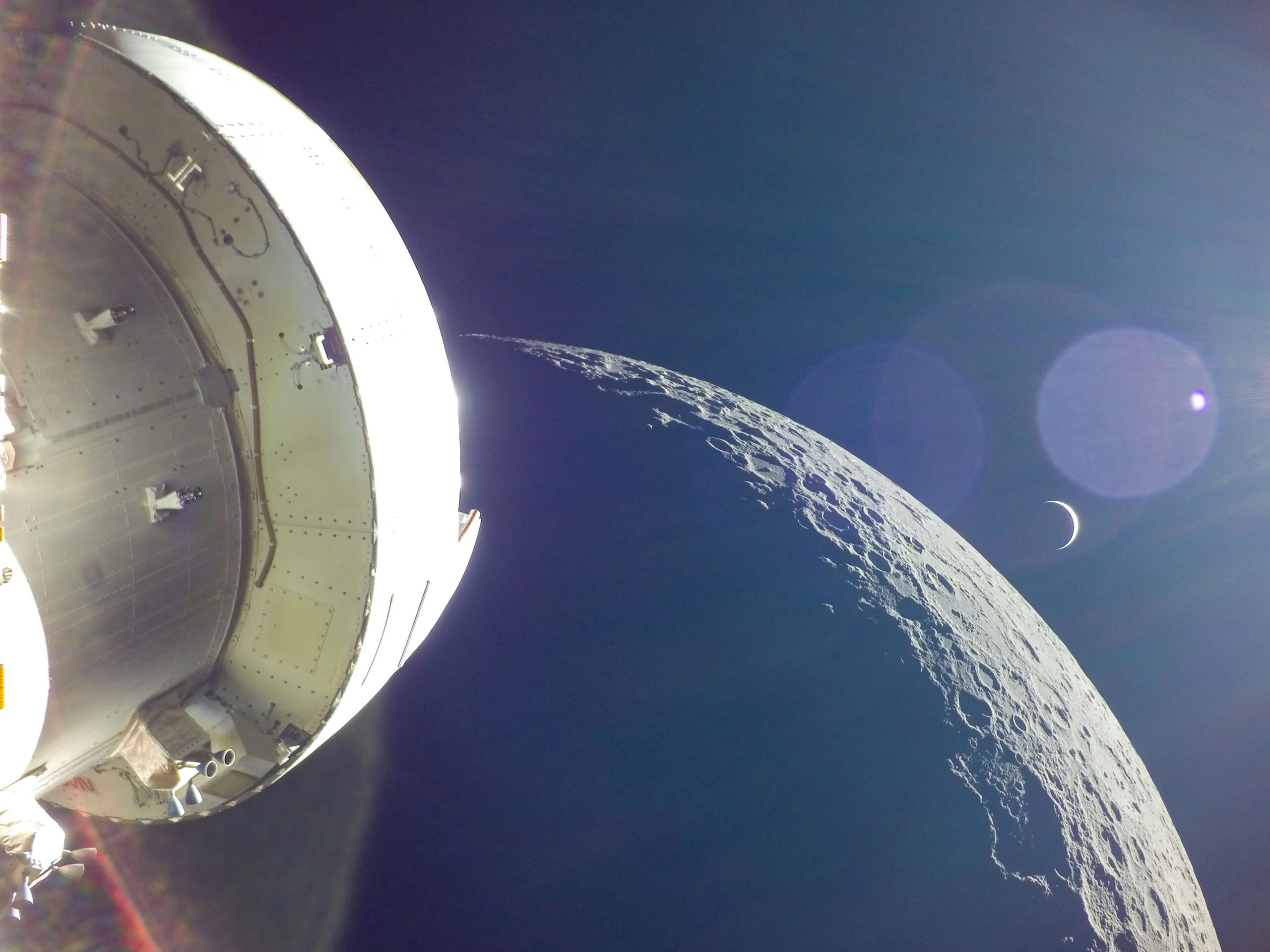
photo courtesy of NASA
Artemis I launched unmanned in November, successfully testing the Orion spacecraft—the most powerful rocket ever to be in operation—and the Space Launch System (SLS). Artemis II will examine the Orion space module’s environmental control and life support systems, which will be used throughout all of the currently planned Artemis missions. With four astronauts on board—Reid Wiseman, Victor Glover, Christina Koch and Jeremy Hans—the mission will utilize ARCHeR, a small watch that is designed to measure astronauts’ well-being, activity and sleep data, with the intention of collecting data about humans during deep space travel. Originally scheduled for February, the mission has experienced several delays due to a helium leak—and is now set to launch no earlier than April 1, 2026, from the Kennedy Space Station.
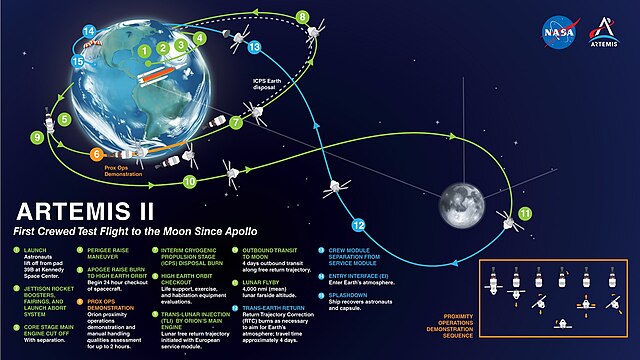
photo courtesy of NASA
Some think NASA, in partnership with the Trump Administration, are moving too quickly. “We don’t have the 3D printing technology or the feasibility unless a massive amount of budgeting is put towards NASA and towards other private companies that are making progress. It would require a Cold War-level overhaul of the Space Administration,” Lick-Wilmerding High School astronomy club member Ved Marya ’27 said.
Establishing a sustainable lunar base will require advanced technologies, including nuclear fission for power, autonomous robots, closed-loop consumption systems for vital resources like water, methods of growing food, and healthcare.
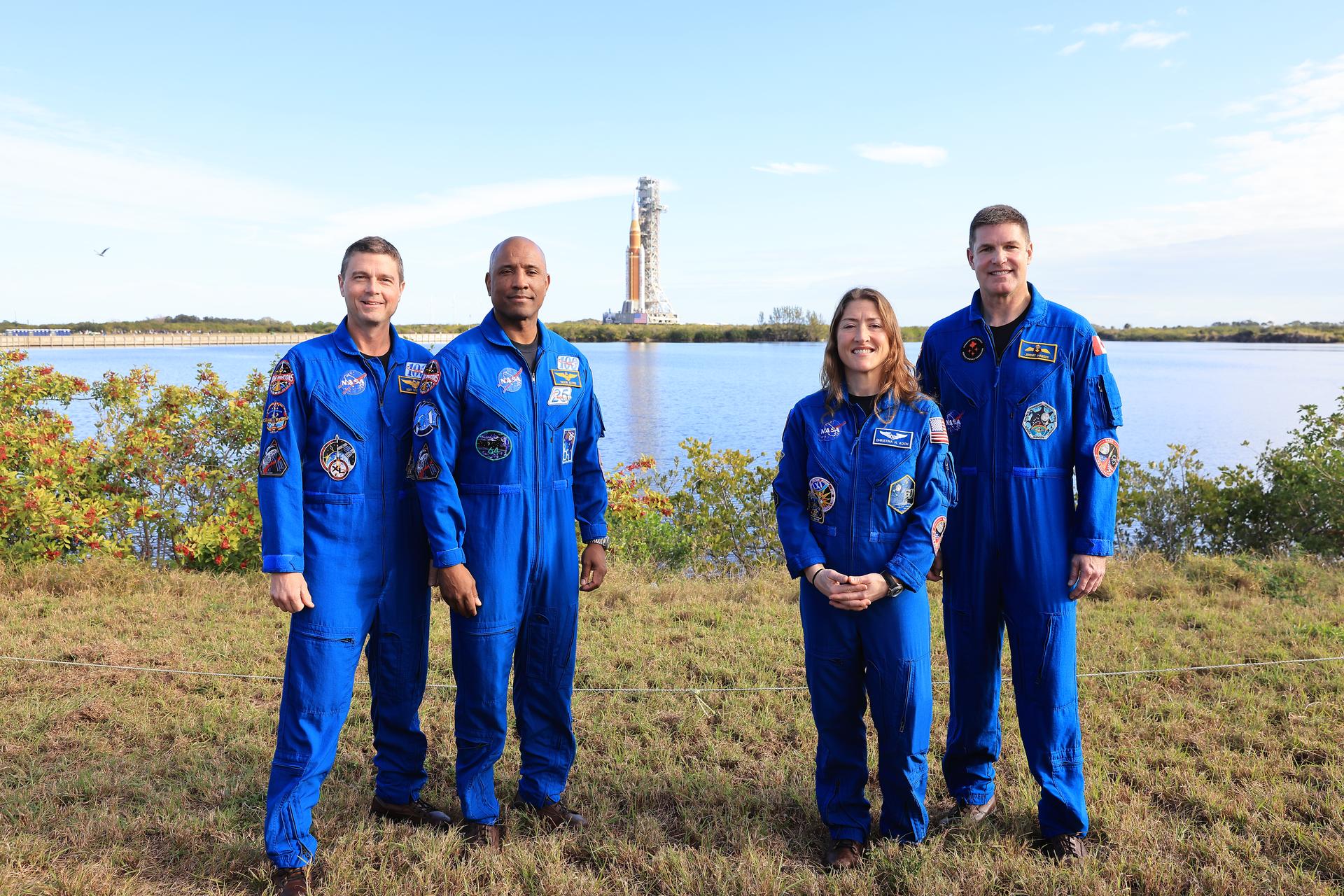
photo courtesy of NASA
Driven to ensure any moon landings are safe and achievable, NASA has also rescheduled the launch of Artemis III—which was initially planned to be the first lunar landing but will now be a low lunar orbit to 2027. Artemis IV, which will now be the first lunar landing, is proposed for 2028. “I’m excited because I think we have a path here to actually get the job done within the time frames that we’ve targeted right now,” NASA director Jared Isaacman said in a February 2026 press conference.
In its 61 years, NASA has always partnered with private companies like Boeing and Grumman to build rockets, with companies like SpaceX now taking on even more pronounced roles in the process. “I don’t really like [the involvement of private entities], because that means that those companies are going to brand stuff…space will be advertised as something to conquer, not explore,” Marya said.
However, others feel that private companies could also bring benefits. “I do think that, with the cooperation between a national agency and private companies, space travel is more and more achievable and appealing to people,” Artemis Boda ’27, an LWHS Astronomy club member and aspiring aerospace engineer, said.
photo courtesy of NASA
According to a 2023 Pew Research Center study, only 32% of Americans believed private companies could make progress without the help of NASA, and 65% said it is essential that NASA is still involved.
With the introduction of Artemis II and the broader Artemis program comes the potential for greater opportunities for those interested in the field. “I think that the job opportunities are going to come from private companies,” Marya said. In 2022, NASA reported that the Artemis program supports 69,000 jobs.
Many believe that a successful Artemis program would bring more people into the field, in addition to greater hope and excitement about U.S. space exploration. As of a 2025 Pew Research Poll, 67% of Americans favor sending humans back to the moon. In the 2023 Pew Research Poll, 69% of Americans said it is essential for the U.S to be the leader in the space race. For many, the Artemis program—and the Artemis II mission—are actionable steps toward those goals.
Although Artemis II has yet to launch, excitement remains about the innovation and potential discovery that lie on the horizon. “More students becoming more interested in space and the physics that goes along with that…I think it’s awesome,” LWHS physics teacher Paul McCullough said.