

October 26, 2025—With the capture of El Fasher, capital of Sudan’s Darfur region, by the Rapid Support Forces (RSF) after an 18-month siege against the Sudanese Armed Forces (SAF), Sudan enters a new era of brutal conflict, caught between the two groups struggling for power. Since fighting broke out on April 15, 2023, the toll has been staggering: upwards of 400,000 people have been killed, mass ethnic cleansing has ensued across Darfur, more than 13 million civilians have been displaced and entire cities are trapped in famine. Yet in classrooms, news cycles and much of the global political sphere, the conflict barely surfaces. The world’s largest humanitarian emergency sustains very little mainstream attention.
This lack of advocacy contrasts with discussions of Sudan a couple years ago, where #BlueForSudan dominated public philanthropy and school campuses united against international genocides. “There isn’t anyone standing up for the Sudanese people the same way you have people standing up for the Palestinians,” John Gaudette ’03 said. Gaudette is a Lick-Wilmerding High School alumnus and advocate for international accountability in Sudan.
The civil war stems from a power struggle between Sudan’s two dominant military forces: the SAF, led by General Abdel Fattah al-Burhan, and the RSF, commanded by General Mohamed Hamdan Dagalo, one of the country’s wealthiest men. The RSF grew out of the Janjaweed, a state-sponsored paramilitary group that carried out atrocities during the 2003-2020 Darfur War, which has since been condemned by the International Criminal Court and labeled a genocide by the U.S.
Since gaining independence from British-Egyptian colonization in 1956, Sudan has endured divisions between its northern and southern regions, suffering three deadly wars from 1955 to 2020, and the brutal 30-year authoritarian rule of Omar al-Bashir, characterized by his severe interpretation of Islamic law.
In April 2019, al-Bashir was overthrown by the RSF and SAF, leading to the establishment of a transitional government and fleeting movement towards democracy. However, democratic support was met by heavy resistance from both the SAF and RSF, inciting the Khartoum Massacre of over 120 pro-democracy protesters on June 3, 2019. The government was subsequently overthrown once again by the RSF and SAF, who initially intended to rule the nation in unison. This partnership quickly collapsed, instead escalating into the current feud for control.
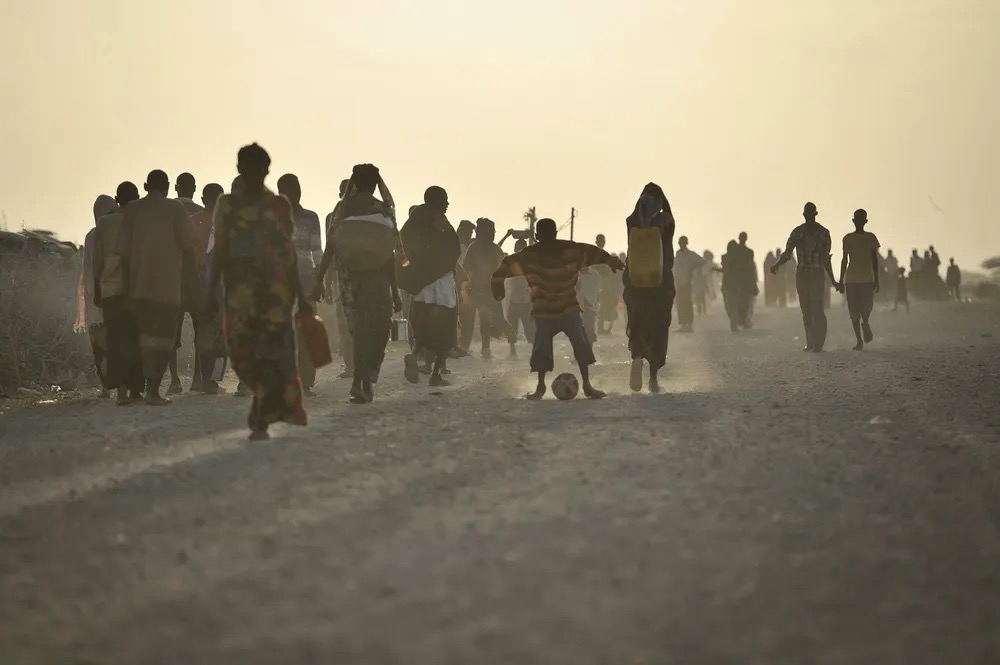
Over 13 million people have been displaced, including 3.3 million seeking asylum in neighboring countries’ overcrowded refugee camps. 25 million people are facing starvation and famine, and over 12 million women are at heightened risk of gender-based violence. “Women’s bodies become a crime scene in Sudan,” Anna Mutavati, the United Nations (U.N.) Women’s Regional Director for East and Southern Africa, said. Meanwhile, the World Health Organization deemed health-care facilities as “on the brink of collapse.” As a result, Sudan holds the grim title of the nation with the highest rate of internal displacement, the largest hunger crisis and the worst humanitarian crisis globally.
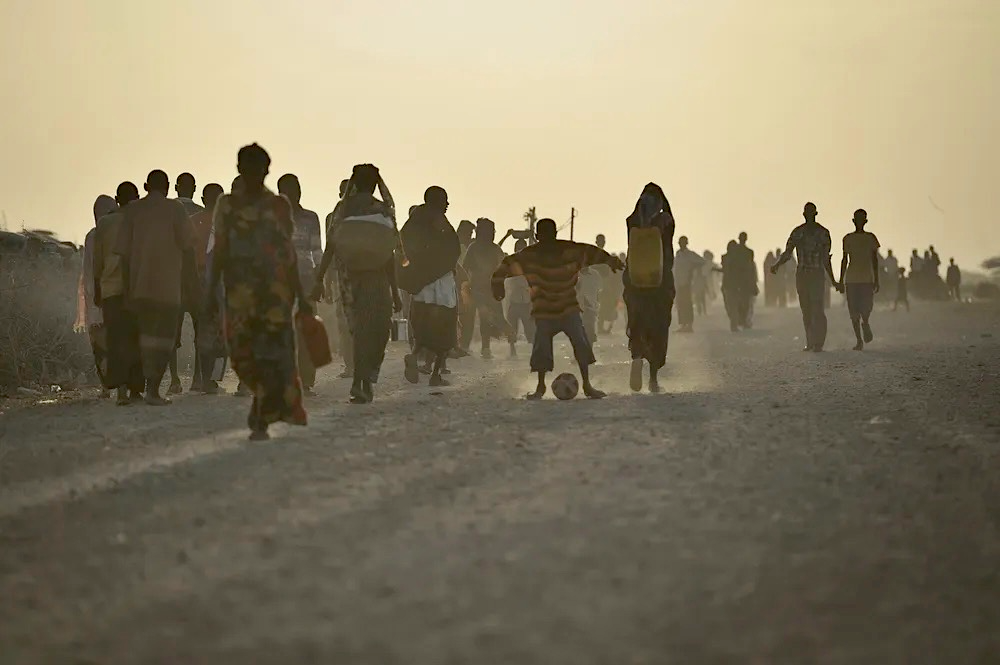
Both groups are committing widespread massacres, reinforcing centuries-old patterns of ethnic cleansing in Darfur targeting the Fur, Masalit and Zaghawa people. “There’s no good guy in the fight,” University of California, Berkeley (UCB) professor Bruce Hall said.
Though international powers have gotten involved in the conflict, little progress has been made. “The Quad”—comprising the U.S., the United Arab Emirates (UAE), Saudi Arabia and Egypt—attempted to broker peace, overseeing multiple ceasefire attempts and imposing visa restrictions on Sudanese military leaders to contain the violence. Nonetheless, every call for a ceasefire has been ignored, with the RSF and SAF severing ties with groups pursuing peace strategies.
Reporters in Sudan allege that the UAE supplied arms to the RSF in exchange for Sudanese gold, sparking controversy. “This seems likely to just go on and on…it’s always in somebody’s interest to keep fighting,” Hall said.
El Fasher’s fall marks a devastating escalation. As the capital of Darfur, the city has become the latest center of mass killing. Yale’s Humanitarian Research Lab’s executive director, Nathaniel Raymond, described the capture in an article for the Yale Daily News. “Individuals on the ground sent a message…Monday morning that 1,200 were dead. By that evening, they said 10,000. By Tuesday, we couldn’t reach them anymore. We assume our ground contacts are dead,” Raymond wrote. Reports have indicated that civilians attempting to flee a newly constructed checkpoint surrounding the city are being shot and abducted.
Additional research from Yale’s Lab used satellite imagery to find evidence consistent with the RSF’s alleged mass killings in El Fasher: in the imagery, areas of Earth are discolored red by the sheer amount of blood spilled, and covered by what appears to be piles of bodies.
After his recent visit to Sudan, Tom Fletcher, the U.N. Under-Secretary-General for Humanitarian Affairs and Emergency Relief Coordinator, referred to El Fasher in a social media post as “the epicentre of human suffering in the world.”
Despite Sudan holding the title of the world’s worst humanitarian crisis, its suffering occupies only the faintest corner of global media. “There really should be alarm bells going off at all of the highest places,” Scott Straus said. Straus has given lectures at a number of universities—including UCB and Washington University—aiming to educate students on the conflict and spark action.
Fundraising efforts for this tragedy have fallen short. Only 35.4% of the 2025 Sudan Humanitarian Needs and Response Plan’s required $4.16 billion to assist 20.9 million civilians has been funded.
Meanwhile, media coverage analysis shows that Gaza and Ukraine largely dominate international attention, averaging 58.5 and 19.4 articles per day, respectively. Sudan receives far less, despite suffering the “worst humanitarian crisis in the world.”
A major factor in this lack of recognition is the media vacuum in Sudan itself. When violent occupations began, most news outlets collapsed, leaving the country without independent press organizations. Even so, some Sudanese journalists have stepped in to document the rapidly unfolding events. Darfur 24, a local digital outlet, has become one of the few remaining windows into the conflict, trying to provide reliable coverage at a time when trustworthy information is hard to find.
Sudan’s apparent invisibility raises uncomfortable questions about which crises we learn about, which we do not and how much of that is dictated by politics, geography or the limits of Western media attention. “Africa gets much less attention than other regions of the world. I think that it’s related to race,” Straus said.
This obscurity has not always been the case. Students uniting for nationwide protests on college campuses against the Darfur War in the early 2000s provide a valuable blueprint. Published in 2007, one Cornell Daily Sun article “Students React to Darfur Genocide” cites actionable steps students took, including a 600-mile “Ride Against Genocide” bike ride, postcard campaigns urging former President George W. Bush to intervene and distributing food through the World Food Program. The wave of activism even pushed Congress to implement the Darfur Accountability and Divestment Act, which directed the president to reprimand individuals responsible for genocide in Darfur.
The rise of social media amplified this progress. After the 2019 coup, #BlueForSudan circulated throughout social media following the murder of 26-year-old Mohamed Hashim Mattar, who was killed during the Khartoum Massacre. Users supported the movement by changing their social media profiles to Mattar’s favorite shade of blue and posting blue artwork.
Today, much of this earlier momentum appears to have dissipated. School campuses that have recently united against the Genocide in Gaza or War in Ukraine largely remain silent about Sudan, which raises questions about why some types of conflicts spur international action while others do not and why advocacy for certain issues outweighs that for others.
Still, there are traces of engagement emerging. On November 30, model Bella Hadid and actor Pedro Pascal announced “Artists for Aid,” a benefit concert taking place in Los Angeles on January 10, 2026, to collect donations for the Sudanese American Physicians Association and the Palestinian Children’s Relief Fund, featuring performances by Blood Orange, Daniel Caesar and Clairo, among others.
Grassroots voices have also tried to bring Sudan back into view. Ring Beyond Borders, an international youth-run organization, promotes cultural integration and inclusive policy through journalism and student-led projects.
From June 2025 to May 2026, Ring hosted “Countless Cities, The Biennal of the Cities” of the World at Farm Cultural Park in Sicily, which featured a student-curated exhibition on Sudan. “The impact of ‘Countless Cities…’ created a space for young researchers to present politically engaged work, fostered critical dialogue on global injustices and demonstrated how student-led initiatives can contribute meaningfully to public understandings of major world events,” co-leader of Ring, Ines Billeaud, said.
Without external pressure or support, Sudan’s brutal conflict will persist while the humanitarian situation continuously deteriorates. Nearly half a million people have been killed and millions more are dying from acute famine. And yet, Sudan has come to be known as “the forgotten war.”
Inaction will be fatal. Straus’ parting words demand global attention on Sudan: “Don’t turn a blind eye to mass suffering.”