


A meaningless free throw, a last-second field goal or a 9th inning strikeout can now net thousands of dollars through bets, making the games we love to watch no longer about points and plays, but about profits. As online sports betting booms, gambling addictions are rising—and the integrity of the sports we love is on the line.
On October 23, 2025, former Miami Heat guard Terry Rozier was arrested for allegedly faking a foot injury in 2023 and removing himself from the game to cash in on bets placed by his friends. Soon after, the National Basketball Association (NBA) put him on indefinite leave.
Just weeks later, on November 9th, the sports-betting scandal spread to Major League Baseball (MLB) when Emmanuel Clase and Luis Ortiz, two pitchers for the Cleveland Guardians, were charged with leaking insider information to gamblers about their pitchers—allegedly accepting thousands in bribes. Wagers tied to their pitches racked up more than $450,000. The MLB placed both players on paid leave.
These cases are the latest fallout from the 2018 Supreme Court decision Murphy v. National Collegiate Athletic Association, which struck down the Professional and Amateur Sports Protection Act (PASPA) and opened the door for legalized sports gambling. Since then, betting has become legal in 39 states and the District of Columbia.
The sports world was quick to capitalize on this new legality.
As of December 2025, leagues like NBA, WNBA, and MLB all partner with major sports betting platforms, pulling in billions in advertising deals. Flip on any game this week, and you’ll see it right before the halftime report: flashy ads for DraftKings and FanDuel, the top sports betting platforms. “Everything’s more marketable,” an anonymous sports bettor said, “it’s always really bright and eye-catching.”
Now, the whistle’s blowing for your attention–it is time to place your bets.
And this is exactly what people did.
Proposition bets are tiny wagers placed on individual player performances or events, such as betting on the speed of a pitch or the first player to score in a basketball game. Because of their specificity, they are easy to manipulate and abuse.
In June 2023, in a game against the New York Mets, Clase threw a ball under 95 mph at the bottom of the 9th inning. A single proposition bet on the moment made $58,000. One ball. One bet. Thousands in payout.

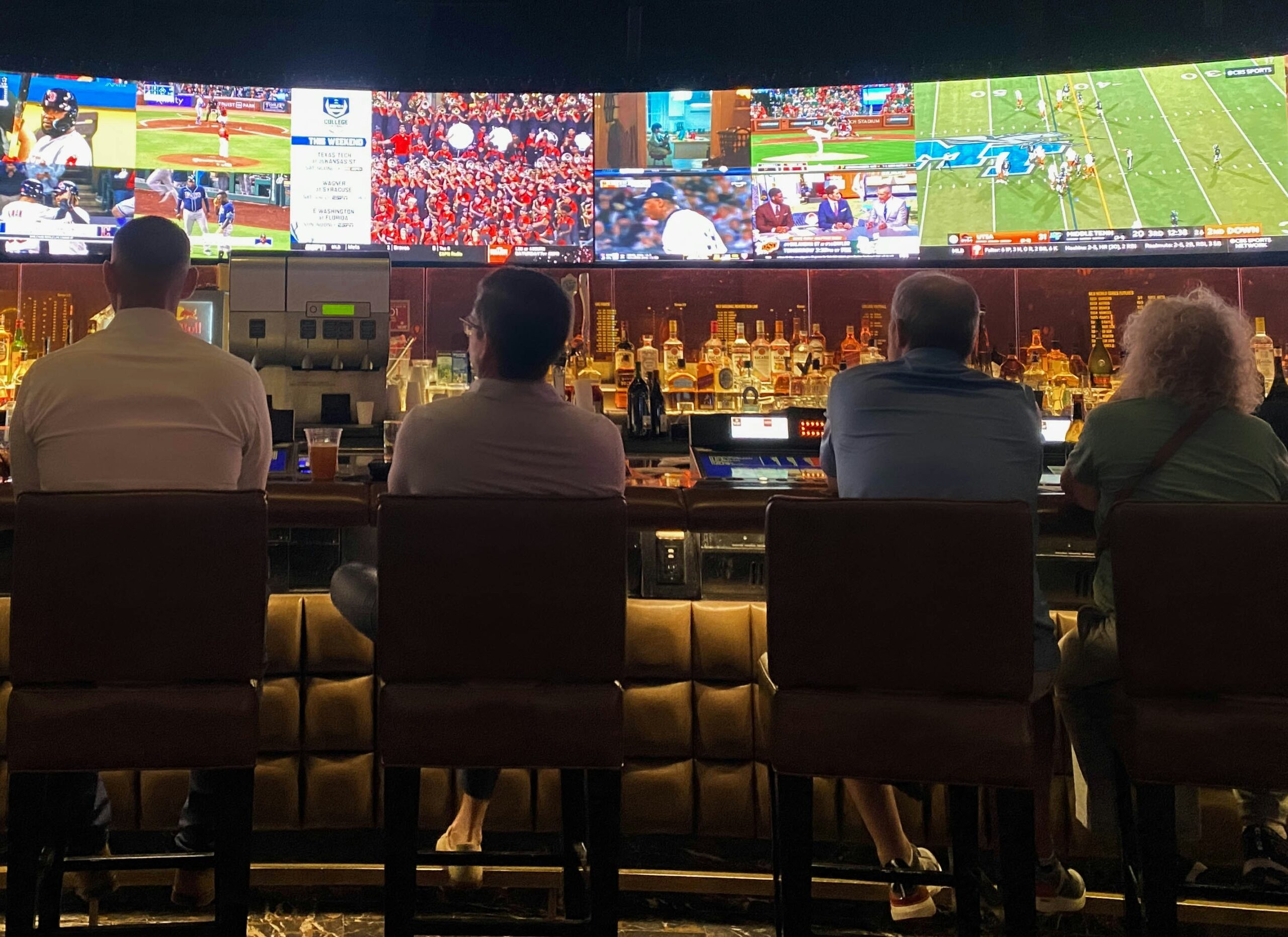
photo by Julia Padova ’28
These microbets have welcomed a new betting frontier: prediction markets. Kalshi, a multi-billion-dollar prediction market led by Donald Trump Jr., has altered the sports betting world. On Kalshi, users buy and sell contracts tied to events—these contracts let people purchase their positions on the outcome of an event—the winning side will get paid out by the losing side.
Feeling lucky about how many inches of rain LA will get this month or how much government spending Trump will cut this year? So are thousands of others already buying contracts through prediction markets.
In January, Kalshi added sports outcomes as an official market. In August, they introduced prop-like contracts to these sports outcomes, and in October, announced their official partnership with the National Hockey League .
The catch? Kalshi isn’t regulated like sports betting.
Operating under the Commodity Futures Trading Commission (CFTC), Kalshi is considered a financial market where users trade contracts on event outcomes—not a sportsbook, a platform that sets the odds for sporting events and takes wagers on them. Prediction markets do not follow state gambling laws, do not pay state taxes, and are—by law—legal in all 50 states.
Sportsbooks have restricted usage to individuals 21 years and older. Anyone 18 and older can use Kalshi, and safeguards are loose.
The National Council of Problem Gambling said in a letter to the CFTC that prediction markets should add “stricter safeguards around age restrictions and betting limits.” It wrote,
“From a problem gambling standpoint, betting on futures is functionally gambling.”
With the rise of online gambling and its accessibility, tighter restrictions are more important now than ever. Dr. Aleksandra Drecun is a Licensed Clinical Psychologist practicing in San Diego. “Any kind of addiction that has easy access to the internet makes the addiction so much harder to work with or manage, because our society is set up in a way where it’s difficult to function without a phone,” she said.
Dr. Drecun shared that, as a country, we indoctrinate our kids into sports and athletic communities from a young age. “Because of this,” she shared, “Experts have found that sports betting and gambling are being marketed to teenagers and people under 21, who are not legally allowed to gamble.”
Gambling addiction is a process addiction, making it behavior-based in nature. And now that it is at the tip of our fingertips, coping with it is harder than ever.
Sports betting has become normalized—by the leagues, by the players and by the fans. With the recent scandals and the boom of online betting platforms, the way we consume sports may be changing forever.
For many, the magic of sports comes from the unexpected, the idea that anything could happen. An uptick in corruption and bets means losing the very things that make watching sports so special: the joy, the low-stakes fun and the thrill of the unpredictable.