On February 24, 2026, after four weeks on the picket line, 31,000 nurses and healthcare workers called off their historic strike, tentatively accepting the 21.5% wage increase originally offered by Kaiser Permanente last October and easing strain on patients. Two weeks later, the national bargaining team announced a draft contract with Kaiser ready for member ratification.
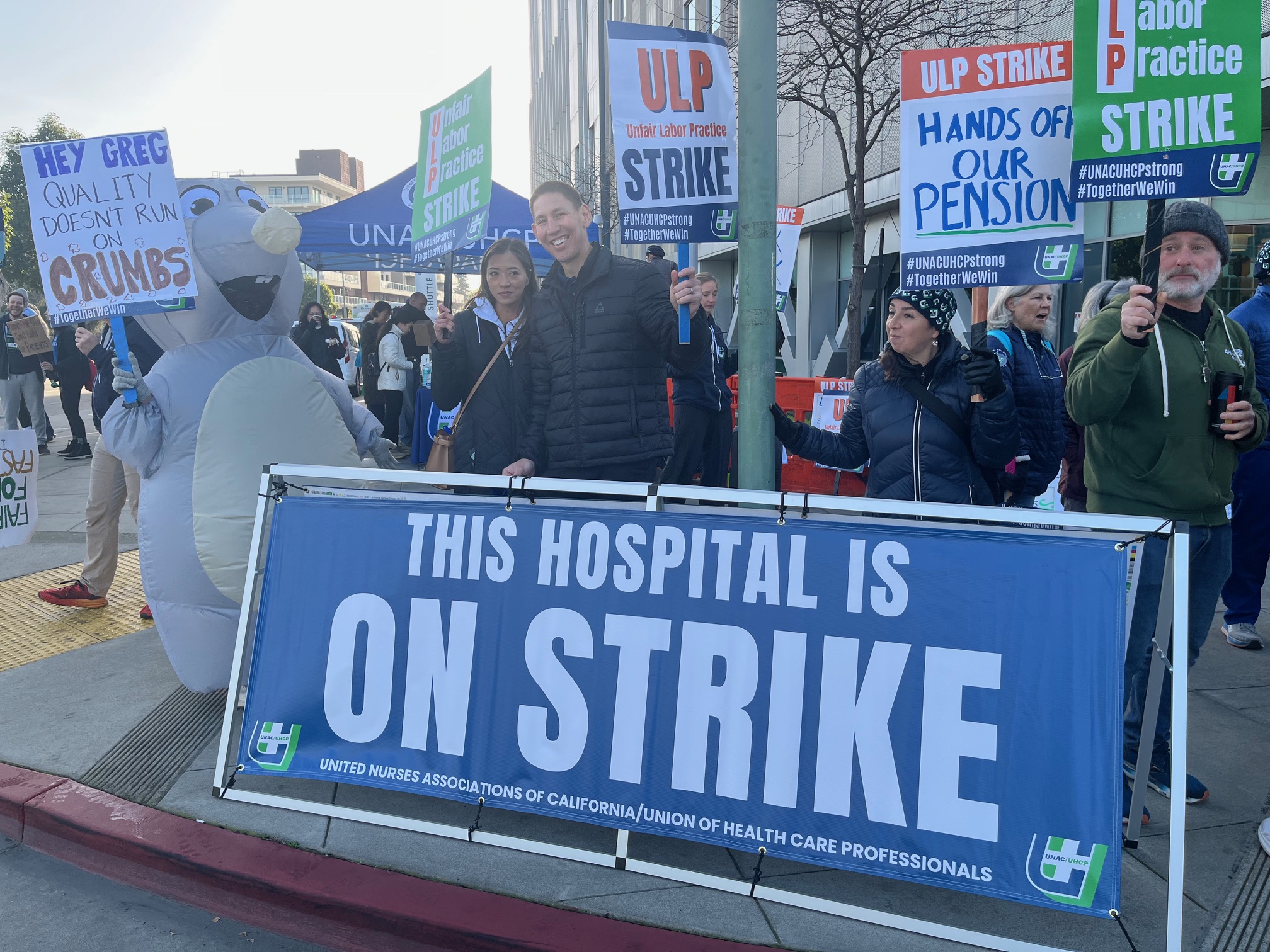
On January 26, 2026, the United Nurses Associations of California and the Union of Health Care Professionals (UNAC/UHCP) initiated an open-ended strike, demanding better negotiation practices, safe staffing, protection of benefits such as pension and a 25% wage increase.
UNAC/UHCP operates within a labor-management partnership with Kaiser, a collaborative agreement to strive for the same organizational goals. As a result, strikes are rare. This action marked UNAC/UHCP’s first open-ended strike in its 54 years, and the largest by healthcare workers in U.S. history. Though UNAC/UHCP held one and five-day strikes in September and October, respectively, an open strike is fundamentally different: it requires sustained commitment from union members over an indefinite period.
The picketers in Northern California were certified nurse midwives (CNM), CRNAs and physician assistants, who organized with UNAC/UHCP two years ago but have yet to ratify a contract. As a multi-part union across California and Hawaii, the bargaining team negotiates a global contract with Kaiser for all union members under a national agreement.
Kaiser made a final offer on November 4, 2025, including the now endorsed 21.5% wage increase. At the time, the union rejected the proposal for not keeping up with national inflation, which has risen 20% since 2021, when the last contract was signed.
Hannah Bronksy-Peña has been a Kaiser CNM for nearly 10 years, and is on the bargaining team.“From the beginning, it has been a fight to get them to listen to us and trust that we have the expertise on how to do our jobs,” she said. “I want to be at the bedside, but we have to be out here because Kaiser…has not come to the table in good faith…and now is trying to dismantle our national agreement.”
On January 21, 2026, Kaiser communicated that, due to the impasse at the national level, the company was shifting to working out individual contracts with local parties.
Five days later, the union began an Unfair Labor Practice strike, citing Kaiser’s refusal to return to national negotiations. UNAC/UHCP also produced a report in January criticizing the disparity between Kaiser’s $12.9 billion profits in 2024 and $66 billion in unrestricted reserves and the lack of reinvestment in patient care, highlighting concerns such as “persistent understaffing, intensifying workloads, burnout, delayed care and instability.”
“Kaiser Permanente has lost sight of its mission and the values that once defined it,” the report stated. “It has abandoned its roots and turned away from the founding principles that once put people–not profits–at the center.” Henry Kaiser founded the company 81 years ago to provide affordable care to his workers; it has since been widely lauded for quality healthcare.
Jerri Witt, San Francisco resident, has been a Kaiser member for 46 years. “My primary physician, I just love her…the most important thing is having this primary doctor that knows you and you know them that you can be completely frank with,” she said. “And so, I would rate my experience at Kaiser very highly.”
Yet Deborah Zwinger, a certified registered nurse anesthetist (CRNA) at Kaiser for 27 years, noted the shift in corporate priorities.
“When I first started, Kaiser was the place to work. We were kind of like the golden child. You wanted to work for Kaiser; they not only paid the best, but they had the best scope of practice,” she said. “Now, all they care about, it feels like, is: What’s the budget doing? How can we fix the budget, budget, budget, making us do more work, spend less time with patients and it’s frustrating.”
Kaiser regularly maintained that the strike was unnecessary due to the “generous” available offer. “Kaiser Permanente employees represented by UNAC/UHCP…earn, on average, about 16% more than similar roles at other health care organizations,” a Kaiser statement said.
However, Zwinger said, “CRNAs in Northern California are under market value as far as pay. We’ve lost about a third of our staff to other hospitals such as Stanford, UC Davis and UCSF due to better pay and working conditions…we’re constantly understaffed.”
Peña echoed the sentiment. “We are constantly pushing ourselves and pushing our bodies and going above and beyond for our patients,” she said. “For Kaiser to then say, ‘keep doing that, we don’t care if you burn out and we’re going to take away your benefits’…is frankly just disrespectful and insulting.”
Both sides agree that the strike impacted Kaiser’s nine million California members. “We usually run 10 operating rooms. They cut them down to five. So surgeries have been canceled,” Zwinger said.
“The strikes disrupted care and service for our members, and they cost our organization over one billion dollars to maintain safer operations,” Greg Homes, Kaiser’s chief human resources officer, said in a video statement.
In addition, workers felt personal financial strain. As UNAC/UHCP members lost faith in a stagnant bargaining process, many began to cross the picket line. “The number of employees who are choosing to return to work has been growing, with more than 35% back,” Kaiser said in a statement on February 12.
UNAC/UHCP leaders issued an unconditional return to work on February 24, with bargaining ongoing across local and national tables. The union announced tentative agreements on March 11, claiming successful wage increases as well as staffing and benefit protections. “We didn’t just win new ground; we held it,” their statement read.
However, some members are upset at UNAC/UHCP leadership for abrupt acquiescence after weeks of uncompensated strike, citing a lack of transparent updates and member input. Nurse voices will be central in the coming days, when the contract is brought to a member vote.
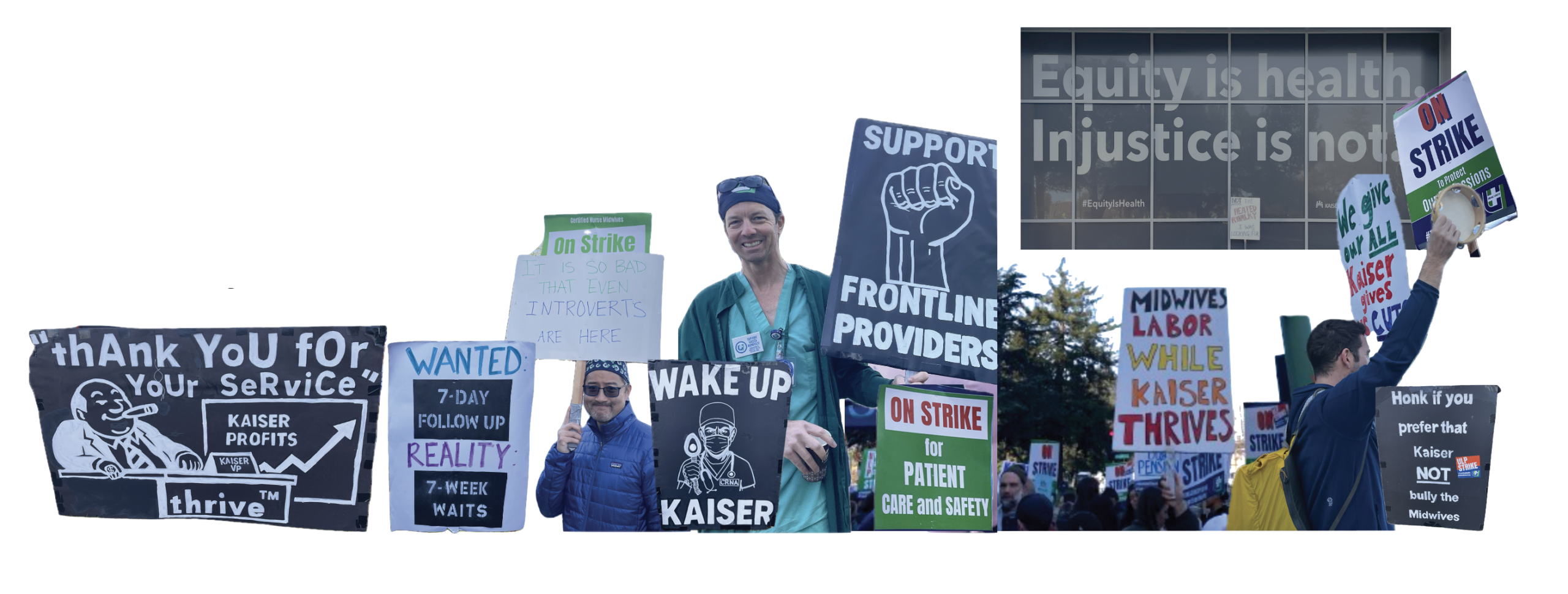
photos by Analise Chin and Mark McCullough