
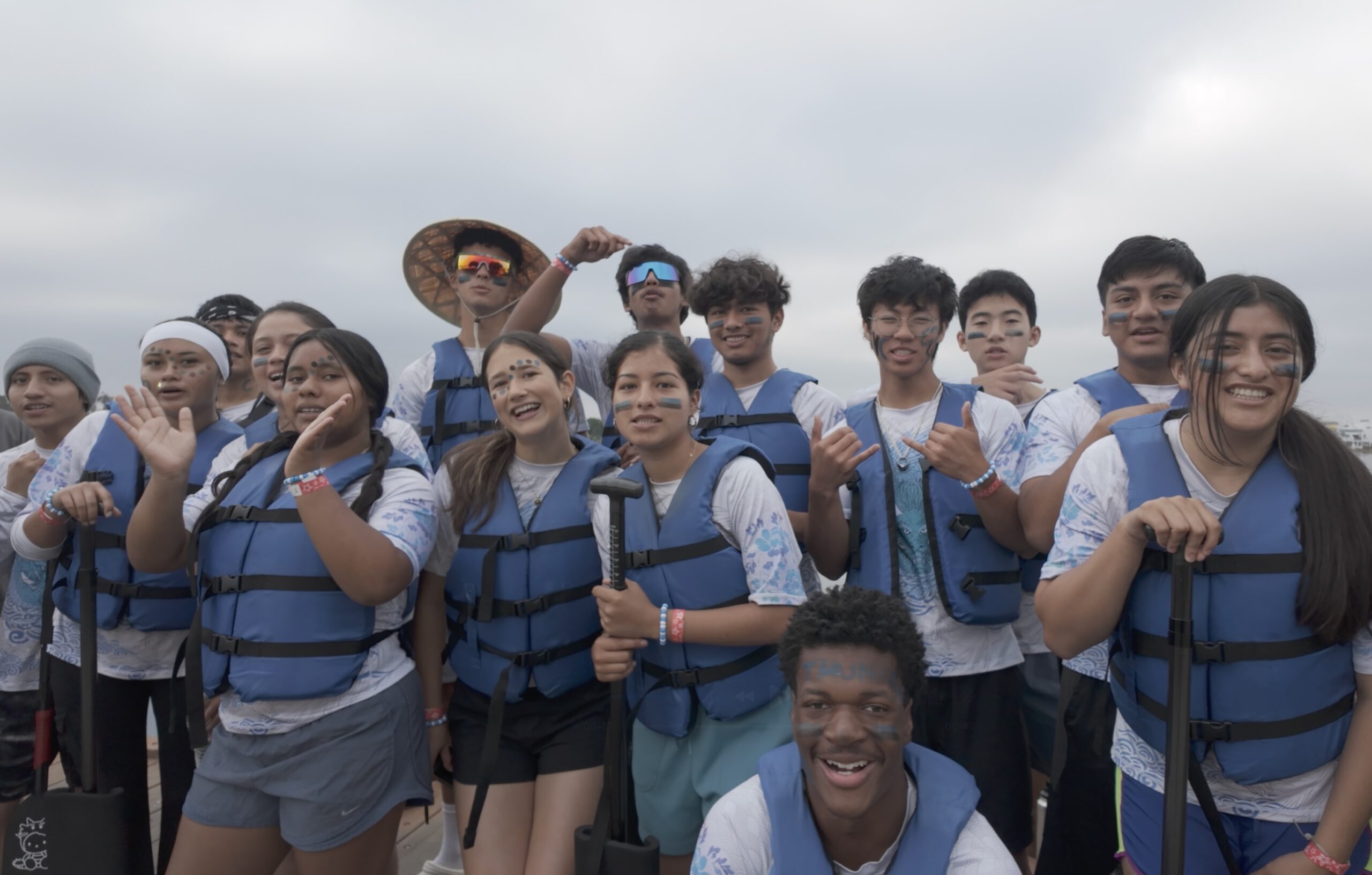
San Francisco, California, February 28 – It is a hazy weekend morning at Lake Merced. A crisp chill hangs in the bay air. The water is still, except for the gentle sway of a long, intricately carved boat, 20 paddles lightly clacking on its sides. When the clocks strike 10:30am, teenagers from all over the Bay Area gather along the shore. They come from different neighborhoods, cultural communities, socio-economic statuses and racial backgrounds.
But on this chilly Saturday morning, one thing brings them together: dragon boat racing.
Dragon boat racing dates back thousands of years to ancient China’s southern river valleys, where it began as a fertility ritual to bring good luck for the crop season. While historically tied to agricultural harvests and spiritual beliefs, modern dragon boat racing grew into an international sport that began in Hong Kong in 1976.
Teams consist of 20 paddlers, a drummer who keeps rhythm at the bow and a helmsperson steering from the stern. The long boats, featuring a dragon head and tail, symbolize power and protection. The drumbeat is the heartbeat of the dragon, and the paddling symbolizes the planting of rice.
Though the sport is mostly associated with China, it has become popular in San Francisco. Public high schools throughout the city—Lowell, Lincoln, Washington, Galileo and Mission—all have competitive teams that race locally. For many students, it is a niche extracurricular activity.
For others, it means something more.
Coach Henry Ha was 16 years old when he immigrated to the United States from Vietnam. He arrived in the Bay Area alone, speaking no English and knowing no familiar faces. Adjusting to a new country was isolating, but a dragon boat became his bridge to community, a place where connection was measured in rhythm, effort and teamwork, not language.
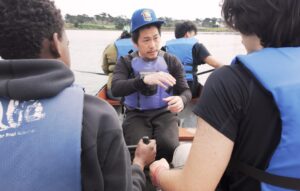
photo courtesy of Joshua Chuck
Ha worked with violence prevention programs in the city, and noticed a pattern: young people were sharply divided by culture, neighborhood and background. “I realized that a lot of kids out there are looking for a community to which they belong,” Ha said.
So, in 2014, he launched a no-cut, no-cost dragon boat team for high-risk youth, run through the Community Youth Center (CYC). In 2021, he curated another special team with a deliberately diverse roster, aiming to bring teens from across the Bay Area together, particularly those in underserved and unrepresented communities. Team participation is free, making it highly accessible, unlike many other competitive sports.
“I was an underserved kid who did dragon boat, and I gained a lot,” Ha said, “Now I want them to have what I had.”
Some paddlers speak only Spanish; some have only recently immigrated to the Bay Area. Many kids take public transportation from all around the city to reach Lake Merced, sometimes traveling over an hour each way. Many athletes have family responsibilities and part-time jobs, making attendance inconsistent.
Even through these challenges and obstacles, Ha makes sure to connect and check in with the kids and their families. He tells them, “This team is not about winning or losing. This team is about getting to know each other, and meeting some friends and learning from each other’s background and also their culture.”
“Real life is at the forefront for a lot of these kids,” said Joshua Chuck, a local filmmaker documenting the team’s journey in his upcoming film, “Dragonboat.”
When making a film, Chuck asks himself, “Will this inspire young people? Because they are the future, they are the people that are going to make something happen.” With no doubt in his mind, Chuck sees that in “Dragonboat.”
Chuck describes dragon boat as “the ultimate team sport.” There is no star player, no single athlete who can overpower the rest; success is about timing, and the group that is the most in sync is the one that ultimately pulls out a victory.
This connection on the water can turn into a connection off of it. “We are connected as a family, even though we are small,” said Gaby Mendoza, a high school senior at KIPP College Preparatory, who joined the team years ago alongside her brother after her friend encouraged them to try it out, despite her lack of experience.
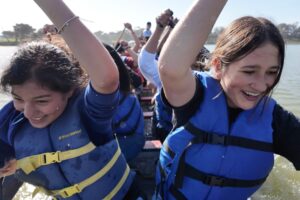
photo courtesy of Joshua Chuck
Chuck, a longtime friend of Ha’s, said that he cannot think of someone better to unite these kids. “He’s the kind of person who can work well in almost any setting. So, no matter what neighborhood he’s in or if he’s with people of different backgrounds, he knows how to get along and communicate well.”
Mendoza acts as a translator for her Spanish-speaking teammates during practice. For her, the sport is more than a competition—it is about curating an environment where everyone is supported. “I’m the heartbeat,” she said. “If one person is off, we all feel it.”
This team has competed in races in Long Beach and Arizona, travel opportunities many of the kids would not have had otherwise. In January, some of the team members traveled to China, where they watched professional races, and trained with members of the National Chinese Men’s and Women’s teams.
The trip was largely funded by donors, yet only six out of the 20 team members could attend. While some had prior commitments, others had immigration-related concerns.
“One of the immigrant kids on the team shared with me that he found his family within this dragon boat team. Only him and his mom are here [in the U.S.], and he treated every one of [his teammates] like a brother and sister on the boat…He felt really safe to paddle with us,” Ha said.
“That’s why I’ve been doing it for so long. Because I can see how it benefits the kids and how the kids can learn from it. I hope that it can change their life.”