

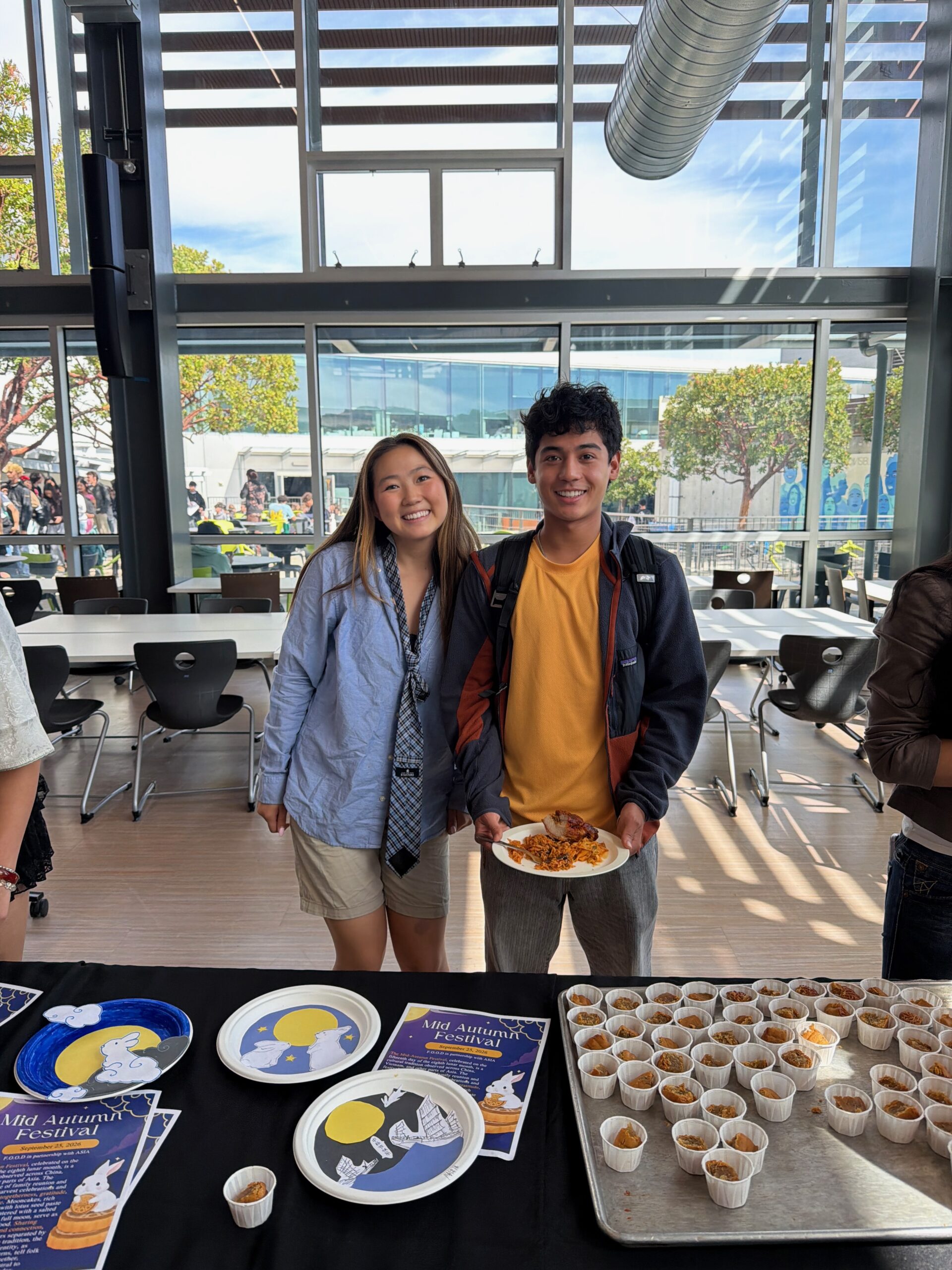
Under Marcos Hernandez’s leadership, following Kathleen Fazio’s departure, Lick-Wilmerding High School lunch is taking a new, exciting, still-delicious direction with the Flavors of Our Diversity (FOOD) program, a system designed to introduce students and faculty to new cuisines.
The FOOD program is a new way to experience different foods, brainstormed by JR Arimboanga, Kaitlyn Sun ’27, Sachin Datar ’27, and assisted by Hernandez’s previous experience working at UC Berkeley. Hernandez came to LWHS wanting to integrate a program like FOOD, so when the Student Inclusion Chairs (SICs) and Director of Student Inclusion approached Hernandez with an idea, he was ready to work with them.
“JR and the SICs were trying to get it off the ground, so I assisted by suggesting the structure to make it happen,” he said.
The program was brainstormed by the SICs and JR to begin their year of Equity, Inclusion and Belonging, but as Datar points out, it is only the beginning of their work. “It’s not the main thing we do in inclusion work, but it’s a very important introductory informative step to get people to understand our bigger topics,” Datar said. “[For students], it’s a great way to get involved with the start of inclusion work.”
The FOOD program aims to highlight different cultures’ food in three different ways. First, through a meal, like September 28th’s Pernil. “[The Pernil] was a meal integration, and I provided educational information on the origins of the food on the menu sign,” Hernandez said.
Second, FOOD commemorations can also feature a stand with some sort of smaller dish, such as October 2nd’s German Culture Day, which also had a meal to go along with it.
The third way a culture could be highlighted via FOOD, which has yet to be done, is an information-only booth. These three options form the outline for any future collaborations with students, which, as Datar points out, are not limited to only affinity club leaders. “[The Student Inclusion Chairs] encourage anyone who has an idea of getting their culture represented to reach out,” he said. “Our job is not to come up with each event because we are not a part of every culture. We just provide the platform for them.”
Both the Student Inclusion Chairs and Mr. Hernandez have an “open door” for ideas, so if you have a culture you want to bring into the LWHS community and decorations in mind, reach out! “Obviously, I can’t just put anything and everything on the menu. But if you come to me with a plan for a meal and ideas for decorations, we could definitely discuss it and see if it’s possible,” Hernandez said.
The FOOD program and the lunch system as a whole have a few goals. “I really want people to experience new things through food–it’s exciting,” Hernandez said. He hopes that students and faculty alike will learn about and enjoy new foods. He also intends to use more whole foods, seasonal vegetables, and prioritize extra-virgin olive oil to create a healthier lunch plan.
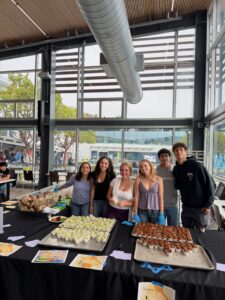
photo by Kaitlyn Sun
These lunch plans, which will include previous meals from the FOOD program, are created for a 6-week timeframe. The culinary staff are then taking it one week, or “matrix,” as they call it, at a time. This allows for the new meals featured by FOOD and classic LWHS lunches like pesto pasta to coexist.
In order to create these lunches, the cafeteria staff must start bright and early to prepare in-house breakfast and lunch. “We all start to trickle in from 6:30 to 7:30, getting everything ready for the day,” Hernandez said. The in-house breakfast includes the new, freshly baked muffins, which have rave reviews from students. “[Those muffins] are my go-to every day,” Kenya Tabuchi ’28 said. But those muffins aren’t the only innovation Hernandez has brought to the lunch program.
Andres Hassan ’29 commented on the comparison between the proteins of lunch before and now: “[Last year] was pretty much just chicken. But now, we’re getting other types of protein on all days, and that’s pretty cool.” Hassan also mentioned his appreciation for the structure of the previous system: “I always could look forward to pasta on Pasta Mondays. I didn’t have to wonder if I would like it or not.”
Yet within Pasta Mondays, there lay an interesting statistic. According to Hernandez, “Sandwich orders get super heavy on Mondays, because the majority of the students want an animal protein.”
FOOD, at its core, is an invitation to try new things as a community and experience a lunch together. As Hernandez hopes, “I want it to become commonplace for everyone to try a new lunch together–and love it.”






+ There are no comments
Add yours