
On August 26, 2026, the Bhotekoshi-Trishuli floods—Nepal’s deadliest recorded floods in history—submerged the Nepal-Tibet border due to a collapse of a major glacier from the Himalayas. The floods affected 84,000 people, including 32,000 children, heightening risks of malnutrition, disease and death throughout the country.
With a diaspora of five million, Nepalis worldwide knew people impacted by the floods—particularly in the Bay Area, where the community is the fifth largest nationally. Only 35 miles south of the onset of the floods, in Kathmandu, Ayan Azad ’28 had just begun a semester-long study abroad program when the unexpected catastrophic flooding hit.
When the news of the floods broke, Azad said, “It was like a scene from a movie. Everyone was checking their phones in complete shock. It was a moment of crisis—teachers had to address what was happening.” Azad described the days following as heartbreaking and distant, especially as the extent of the devastation became clearer.
Some of Azad’s classmates at Lincoln International School had family members directly affected by the floods. “There’s this one kid in my grade, and he was calling to check on his uncle who lives in that area…I was right next to him as reports of missing people were made public,” Azad said.
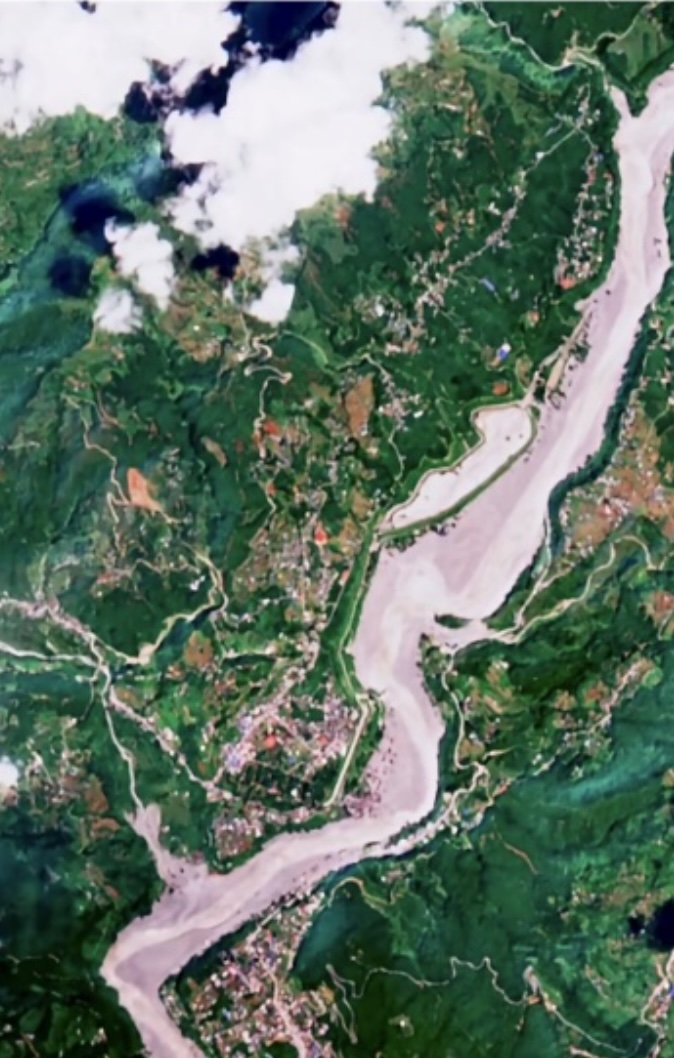
As floodwaters traveled 60 miles downstream along the Trishuli River, mud and water surged at high speeds, most severely across Nepal’s Rasuwa and Nuwakot districts. In all, over 20,000 homes were damaged, 7,500 homes were completely destroyed and around 1,500 people were killed. Rescuers were searching for more than 5,000 people missing until early October—and bodies were recovered more than 100 miles away, in bordering regions including India’s Uttar Pradesh and Bihar states.
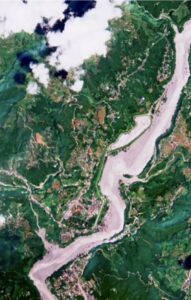
photo courtesy of @dailyoverview on Instagram
On August 28, ABC interviewed Greenbrae resident Jay Tamang, whose loved ones were in Nepal when the floods occurred. His initial reaction to footage of the destruction online was disbelief. Tamang said, “I saw the houses sweeping through and the bridges being swept away, and I thought it was AI.” Anjana Raja, also from the Bay Area, was traveling on a bus with her husband in the Rasuwa district when the floods struck. In an interview with CBS, Raja described seeing the floodwaters approach. “I saw something 60-70 feet high, brown, coming our way…They were just washed out right under my eyes. Everything was gone, right from the roof, the people, everything.”
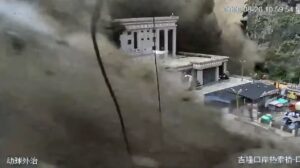
photo courtesy of @bfcnews18 on Instagram
On August 29, members of the Bay Area’s Nepali community gathered in Richmond to honor the flood victims through a candlelight vigil. President of the Nepali Association of Northern California, Preetesh Karki, emphasized togetherness amid the devastation, “We are just trying to show solidarity towards the country, towards the people and be together at times of need,” Karki said. Likewise, on September 7, there was a national day of mourning in Nepal. Azad said, “One thing that’s been super inspiring is the solidarity with the whole flood. Every Nepali, even if they weren’t affected, cut off all celebrations that would happen in the following days to show collective grief and support for the victims.”
As accounts of the disaster spread, uncertainties about its cause surfaced. Azad recalled how different articles he read blamed Nepal for not responding fast enough or in some way causing the floods as a “third world country.” In response to these claims, Azad said, “The fact is, Nepal is contributing 0.1% to global carbon emissions, compared to the U.S. [~10%], and Nepal’s neighbors, China [~30%] and India [~8%] who are producing so much more.” Particularly due to the government elected in March 2026, Nepal has been focused on environmental initiatives like reforestation. “Countries like ours [the U.S.] that emit the most carbon dioxide are affecting vulnerable countries that strive to be stewards of the environment,” Azad said.
As news of the floods rapidly spread, dozens of Lick-Wilmerding High School students and teachers back home in San Francisco reached out to Azad. “People were texting me, “Are you in the water? Are you okay?’…So many of my Lick friends and teachers were checking to see if I was affected by the floods and how I was responding to such devastation so close by—their concern was heartwarming.”
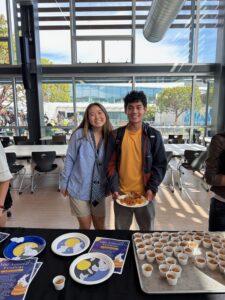
To support relief efforts, LWHS’s South Asian and Middle Eastern Affinity Space (SAME) held a fundraiser, gathering proceeds to donate to UNICEF and support victims of the floods. “I think the bake sale is important to help people, but also to spread the word…I think educating people is really important,” SAME Co-President Riya Rawal ’27 said.
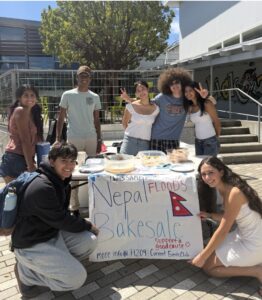
photo by Angie Woo ’27
Around 10-15 people, including non-SAME leaders, helped out with the bake sale. Students from every grade donated or purchased food. “We had mango lassi, rava laddoo and a bundt cake to sell,” Arman Agbabian ’27 said. The Co-Presidents noticed how students and teachers were incredibly eager to support a good cause, regardless if they received treats in return. “They didn’t even care about the baked goods. That was the second priority. They just wanted to support,” Rawal said.
In a world where devastating events are constantly occurring on every continent, it is crucial for the LWHS community to react and respond to international issues. Reflecting on their feelings after the fundraiser, Rawal and Agbabian voiced the importance of caring about global issues, regardless of whether one is affected directly. Agbabian said, “It’s a human tendency to have a culture of ‘other-ing.’ So saying ‘no, it matters to us, even though we are not directly affected by it,’ is what it means to show solidarity.”


+ There are no comments
Add yours