
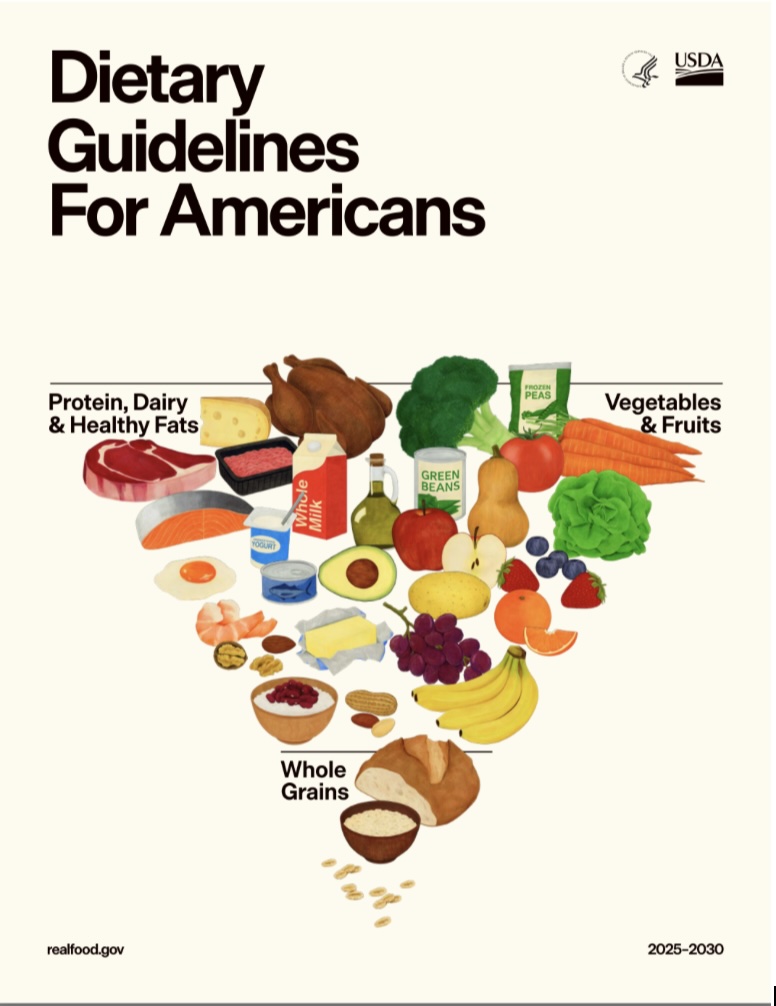
Released on January 7, 2026, the federal government’s new inverted food pyramid—promoted by the United States Department of Agriculture (USDA)—serves as the latest guidance on healthy eating. The Dietary Guidelines’ publication—which, for the first time, emphasizes red meat and protein—contrastingly warns against “highly processed food.” These changes are already influencing policy, including public school lunch standards and limits on what can be purchased through the Supplemental Nutrition Assistance Program (SNAP).
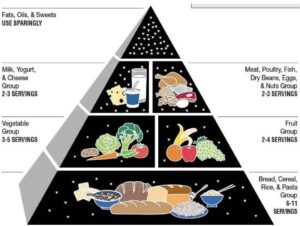
The new food pyramid replaces “My Plate”—the comprehensive breakdown of a meal’s different nutritional components—which had been in use since its implementation during the Obama administration’s first term in 2011. In 2026, Secretary of Health and Human Services Robert F. Kennedy Jr. and his team of expert consultants reverted to the 1992 food pyramid.
“For decades, the U.S. government has recommended and incentivized low-quality, highly processed foods and drug interventions instead of prevention. Under the leadership of President Trump, the government is now going to tell Americans the truth,” reads a statement on the USDA website.
According to the Peterson-KFF Analysis of National Health Expenditure, U.S. healthcare spending is the highest in the world, topping $5.28 trillion in 2024 compared to $74.1 billion in 1970. 90% of the U.S.’s healthcare spending is on chronic conditions and mental health, according to the Centers for Disease Control and Prevention. Many believe that if chronic disease were prevented before its onset, this number would drastically reduce.
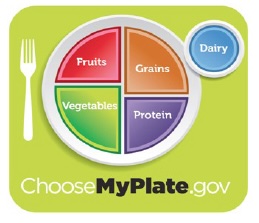
photo courtesy of the Harvard School of Public Health
Kennedy fundamentally revised the pyramid, turning it on its head so there is no “foundation” or most essential food group, but rather an array of equally beneficial foods. In their current form, the guidelines represent a de-emphasis of carbohydrates and a visual prominence of whole foods. This choice is intended to reverse high obesity rates, which stand as the second leading cause of preventable death in the U.S. In addition, protein and red meat are idealized by the written guidelines, which list protein as the first important nutrient, a change from the Biden administration, which consistently listed vegetables as the primary subgroup of nutrient-dense food.
The shift extends to food assistance policy. SNAP now restricts many foods—sodas, candies, prepared desserts and some highly-processed foods—that can be issued via Electronic Benefit Transfer (EBT) to low-income Americans living below or near the poverty line. This legislation tightens the existing SNAP guidelines that allow any food with a nutritional label to be bought.
Though California is not one of the 22 states approved to implement these laws, local businesses and SNAP users are concerned that restrictions may be put in place soon. “We would definitely sell less. A lot of people use SNAP to buy here…Those particular customers aren’t in a position where they should have to worry about this,” Daniel Regan, who manages a Grocery Outlet Bargain Market that accepts EBT in San Francisco, said.
A 2016 study by the University of Michigan School of Public Health found through controlled trials that tightening SNAP restrictions on specific unhealthy grocery items did not significantly change dietary habits or health markers: “such efforts would likely not promote health and would have unintended, negative consequences.”
Additionally, many experts believe it is unfair to force people to adopt a healthy lifestyle by removing affordable options from already sparse shelves. “If we truly care about public health, we should not be taking resources away from families…these restrictions would increase the already significant challenges that SNAP recipients face, most notably stigma and discrimination,” the study concluded.
Many Americans do not have funds, let alone access, to the fresh, preservative-free foods that this pyramid largely consists of. “It’s cool that an artist was hired to draw all these fresh fruits and vegetables. But…when I’ve traveled to places like Alabama, Nebraska or Washington D.C. in the winter…the produce situation is bleak,” Lick-Wilmerding High School History Teacher, René Villicaña, said. Villicaña also teaches the senior history seminar “Foodways in the Past and Present”.

The shift toward an animal-heavy diet has also raised concerns among environmental experts. Ecologists warn that the increased emphasis on red meat and protein could heighten greenhouse gas emissions caused by factory farming. “It’s clear that it’s not sustainable, as our population hits 10 billion around the world, to feed people that way,” Dr. Diedre Tobias, Nutrition and Obesity Epidemiologist at Harvard’s Chan Tseng-Hsi School of Public Health, said.
Contrarily, the planetary health diet, endorsed by the Harvard School of Public Health, reportedly lowers an individual’s greenhouse gas emissions by 29% and 21% lower fertilizer needs. Many advocates for this diet criticize Kennedy and the Department of Agriculture for his ignorance of the country’s agriculture resource consumption problem, as his proposed diet is high in emission-inefficient foods, such as beef.
“It’s not just what you eat and what’s healthy for you. It’s also about what’s healthy for the environment and what’s ecologically responsible,” Villicaña said.
However, Stacey Dunn-Emke, a San Francisco nutritionist, noted that the meat industry has made strides in reducing inhumane practices and increasing resource efficiency, particularly on small, family-owned farms. U.S. cattle farmers have collectively reduced their carbon footprint by 40% per pound of beef since 1960.
Regardless of the divergent opinions on the new guidelines, the U.S. government has very little power in positively changing the grocery scene. “We’re a free market in the U.S., so there’s no requirement that your Whole Foods has to meet those guidelines,” Tobias said.
Experts have yet to propose a perfect solution to the nation’s healthcare issue, yet the current guidelines continue to spark discussion, both in favor of and in opposition to Kennedy. “Hopefully, the guidelines spark and get some momentum for policy and industry change,” Tobias said.