

At the start of 2026, the Tenderloin Community Benefit District (TLCBD), in coordination with the city of San Francisco and non-profit United Playaz, launched the pilot Youth Violence Prevention program in the Tenderloin, aiming to provide stability for unsupported youth.
The Tenderloin has been a hotbed for violent and drug-related crime in San Francisco, with 18% of homicides in 2025 occurring in the relatively small neighborhood. 3500 children live in the Tenderloin, the highest of any San Francisco neighborhood, and they are heavily exposed to the open-air drug markets and violence. Michael Vuong, the deputy director of policy and voice at the TLCBD, oversees the program. “We believe that it’s our lack of investment and attention that has gotten some of our young people into these unsafe situations,” he said.
The program aims to reach youth not participating in after-school programs. “Those aren’t necessarily designed to help the hardest to reach kids. Ours is a very low-barrier program. We’re not asking these kids to come in and have to tell us their life story or work on homework. We’re asking these young people to just stay connected, to come in and be safe,” Vuong said.
Currently funded by private investors, the program hopes to receive permanent funding for the years to come. Neither Vuong nor Corpuz is worried about the funding yet, focusing more on getting the initiative running and hopefully expanding it. However, Mayor Daniel Lurie’s cuts to social programs bring its future into question.
The TLCBD partnered with United Playaz, a youth development and violence prevention organization based in the SoMa district, whose core principle is “It takes the hood to save the hood.” Rudy Corpuz Jr., the founder and executive director of United Playaz, remarked on the difficulties in the Tenderloin. “There’s a lot of drugs, violence and people on the street. People in the Tenderloin are resilient, and kids there have to grow up fast to survive,” he said.
According to Corpuz, the program currently serves around 60 youth, ranging from ages 14 to 24, and is steadily growing. “We provide jobs, activities and a safe space for these kids and young adults,” he said. “We hope that out of ten people, seven become successful or stable.”
District Five Supervisor Bilal Mahmood elaborated on his ambitions for the program in a statement sent to The Paper Tiger. “Our goal is not only to demonstrate what works, but to build a model that can be sustained and expanded to meet the needs of this community over the long term,” Mahmood said. “Initial efforts have focused on staffing, outreach and building trust with youth who are often disconnected from traditional systems of support. This kind of relationship-based work takes time, but it is essential to creating lasting impact.”
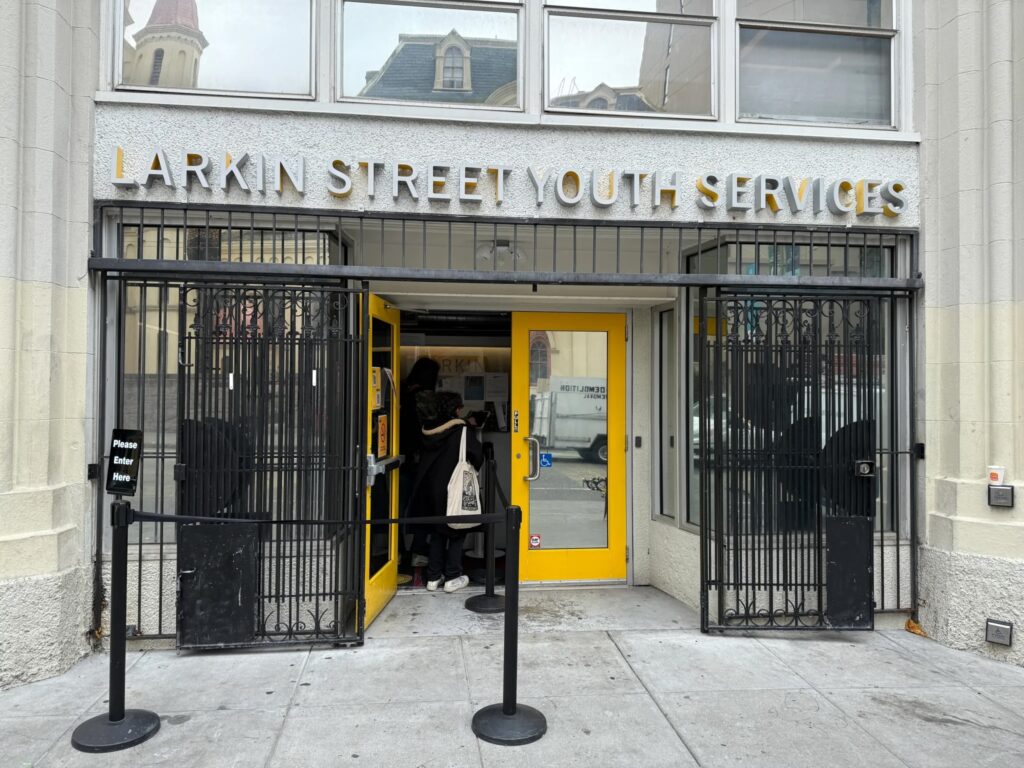
photo courtesy of Gazetteer SF


Despite running on a platform of expanding social services, Lurie has begun cuts to departments citywide, except the police department, in an attempt to curb a two-year $600 million deficit. The Michael Baxter Larkin Street Youth Clinic in the Tenderloin, which offers medical care to youth, is the latest service to be cut. Low volume at Larkin Street Clinic and others is listed as the reason for their closures. However, these small numbers of people may have resulted from the reduced hours. People might have come in, seen it was closed and been less likely to come back. They might also tell others not to go, leading to even fewer people served.
Though Lurie’s police force is making more arrests than ever, issues in the Tenderloin and other affected areas are not yet improving. Progress is reportedly being made, but many residents on the ground feel that those issues are just as prevalent. With cuts to programs like free mental health training for counselors at the City College of San Francisco, the futures of such services are uncertain.
Vuong, who grew up in San Francisco, spoke about how after-school programs helped him in his youth and drove him to pursue youth development as a career. “I was a young person who felt like no one understood or heard me. When I found the Boys & Girls Club, I found mentorship and folks who cared,” he said. “I felt like those were moments that really changed my life around. I decided as a young adult that this is the kind of work I wanted to do.”
Corpuz, a native of the Tenderloin, saw firsthand the issues youth face and how services weren’t provided to help people. The closure of services like the Larkin Street Youth Clinic makes the new Youth Violence Prevention Program all the more important. Whether it has a tangible impact on youth’s lives and continues to recieve funding remains to be seen.