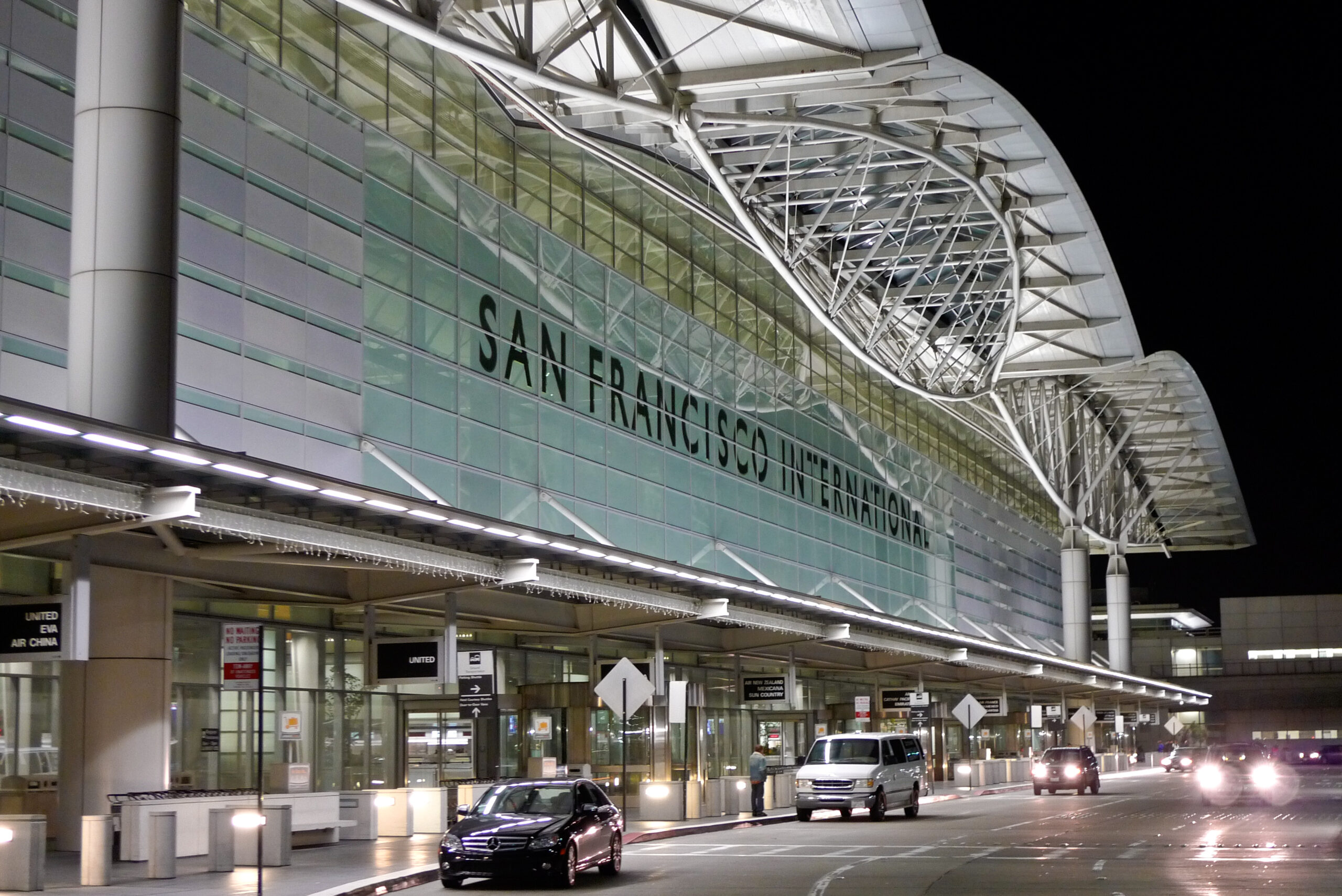
On March 23, 2026, President Donald Trump and the federal government ordered 150 Immigration and Customs Enforcement (ICE) officers to be sent to 14 airports across the United States in an attempt to mitigate travel delays that resulted from the partial government shutdown which started in February 2026. This effort was also part of the administration’s ongoing effort to expand immigration enforcement nationally.
For many, this has raised questions about how far ICE officers can legally operate inside transportation hubs, in addition to heightened concerns about what that presence means for immigrant communities in sanctuary cities like San Francisco. At San Francisco International Airport (SFO), ICE activity has become part of a broader national debate over surveillance, detention and the boundaries of federal authority within sanctuary cities.
In recent months, the Department of Homeland Security has deployed ICE agents to airports across the country, including major cities like Chicago, New York and Atlanta, with the stated mission of assisting with massive traveler bottlenecks caused by a shortage of Transportation Security Administration (TSA) personnel.
This increase follows a trend of escalating immigration enforcement by the Trump administration, highlighted by White House deputy chief of staff Stephen Miller’s goal—shared in a May 2025 meeting with previous Secretary of Homeland Security Kristi Noem—to reach at least three thousand arrests by ICE agents each day.
While ICE has long operated inside international airports—in outlined roles, however, which include performing criminal investigations, checking suspicious passengers and immigration enforcement—recent federal immigration crackdowns and deportation initiatives have intensified public attention surrounding who can be legally questioned, detained or searched while traveling.
This tension surfaced for many locally in the Bay Area on March 22, when a video of two plain-clothed ICE agents at SFO emerged on social media. In the video, the men—who are said to have received a tip from TSA personnel—can be seen restraining and detaining a Guatemalan immigrant while her young daughter watches. The mother, Angelina Lopez-Jimenez, and her daughter had final deportation orders from 2019.
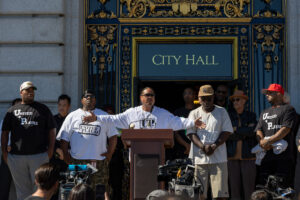
In the weeks since the video’s initial publication, many—including local officials and immigrant communities in the Bay Area—have expressed outrage. California State Senator Scott Wiener spoke on the incident in a March press release. “ICE needs to get the hell out of San Francisco and San Francisco International Airport,” he said.
For students, the video represented increased risks for families at risk of being targeted. Taylor Koo ’26 spoke about increased fears for her family. “My grandparents are immigrants, and when I saw that video, I thought about what would happen if we traveled with them,” Koo said. “It definitely changes the way my family thinks about travel.”
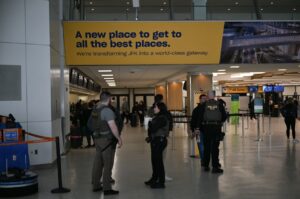
photo courtesy of @matthewrodierphotos on Instagram
The effects also extend past the airport itself. Anxiety surrounding immigration enforcement shapes decisions about travel and even daily commuting through transit systems connected to SFO and Bay Area airports. “It definitely makes me a little bit more hesitant and nervous to take public transportation,” Koo said.
“It has a huge impact. I’ve seen the photos of [ICE agents] standing there in basically fully military attire and body armour, and I found it so unsettling and disturbing,” Siddharth Chibber ’26 said.
San Francisco Mayor Daniel Lurie also spoke on the incident in a statement he posted on his official Instagram account shortly after the event occurred. “I found the incident at SFO last night upsetting. I have spoken to leaders at SFO and the San Francisco Fire Department, and we believe this is an isolated incident,” Lurie said.
The Bay Area is home to one of the largest and most concentrated immigrant communities in the United States, with SFO functioning as a gateway for international travel for many residents. Although San Francisco has repeatedly reaffirmed its status as a sanctuary city, federal immigration authority supersedes local jurisdiction at airports as international terminals fall under federal enforcement control.
Under federal law, Customs and Border Protection officers are allowed to conduct expanded searches or questioning within 100 miles of any U.S. border or coastline, an area that includes the entirety of San Francisco.
However, ICE authority operates differently: ICE officers cannot stop or detain U.S. citizens without reasonable suspicion or legal justification, though they can detain noncitizens who have outstanding deportation orders, undocumented individuals and green card holders with criminal convictions.
For Ann Abbott—parent to Asa Wendler ’26 and Wilder Wendler ’28—these fears became a reality. As a mother who helps coordinate travel for her son’s club soccer team, Abbott commented that recent immigration enforcement operations have changed the way families have to approach travel tournaments through the airport.
“We just clearly wrote to the families that it’s been advised not to travel if there is any question mark around your status,” Abbott said. “You want people to understand how serious this is. I’m a white woman, and if it was extremely scary for me…I just can’t imagine it for someone else.”
As immigration policy remains a defining national issue, airports have increasingly become frontlines where questions of federal authority, civil liberties and public safety intersect. At SFO, those tensions continue unfolding in a city that publicly embraces immigration protections while remaining subject to federal law.