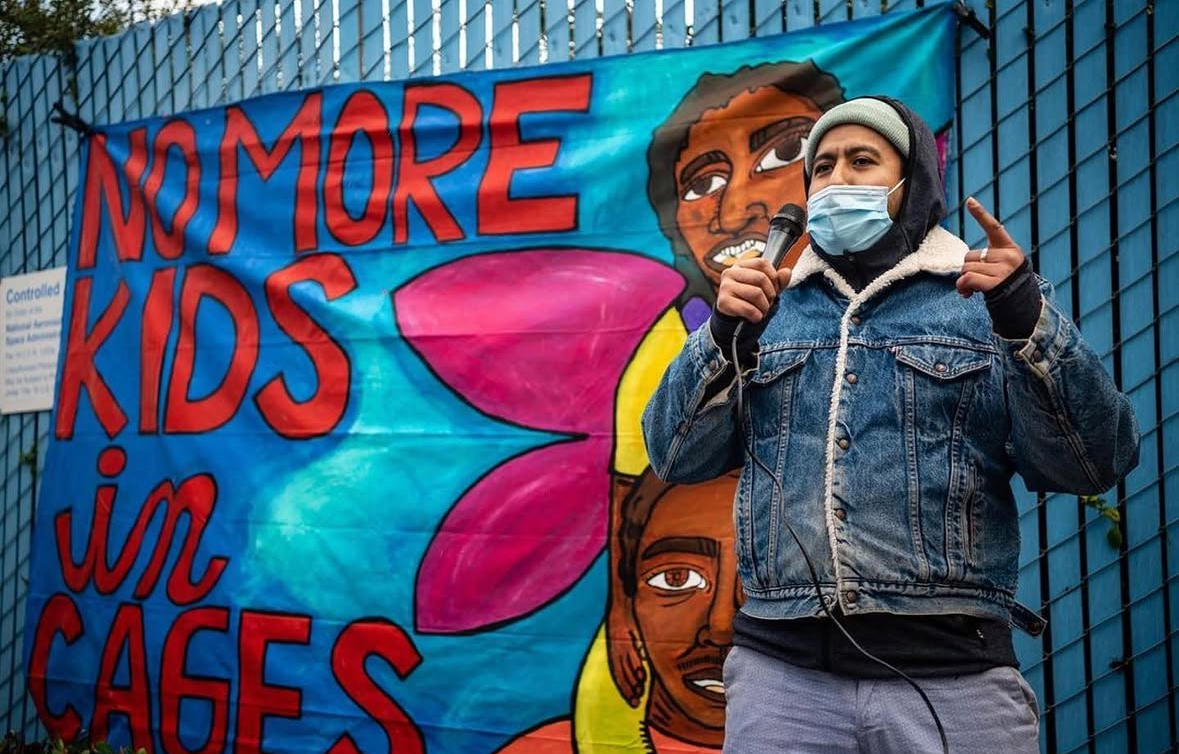

On May 1, 2026, during the May Day protest at Civic Center, artists took a leading role in shaping the day’s message, with the San Francisco Poster Syndicate (SFPS) printing posters on-site as crowds marched. Across the city, art activism continues to surge—through collectives mobilizing visuals in real time, independent artists channeling their voices into public spaces and coalitions working with creatives to put a compelling graphic face to the causes they champion.
Artistic activism blends creative expression with strategic organizing to drive social change, using art’s emotional force to move people where arguments alone cannot. “The goal is not to force compliance, which art can never do, but to persuade by creating moving experiences that prompt people to question the world as it is, imagine a world as it could be and join together to make that new world real,” the Center for Artistic Activism defines.
Across history, some of the most effective civic actors have combined the arts with social change campaigns, using creative expression to critique the world as it exists and to envision what it could become. Long before digital platforms, art was used to disseminate information quickly.
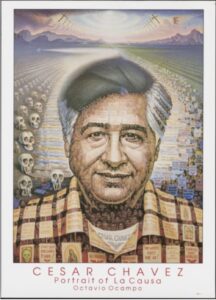
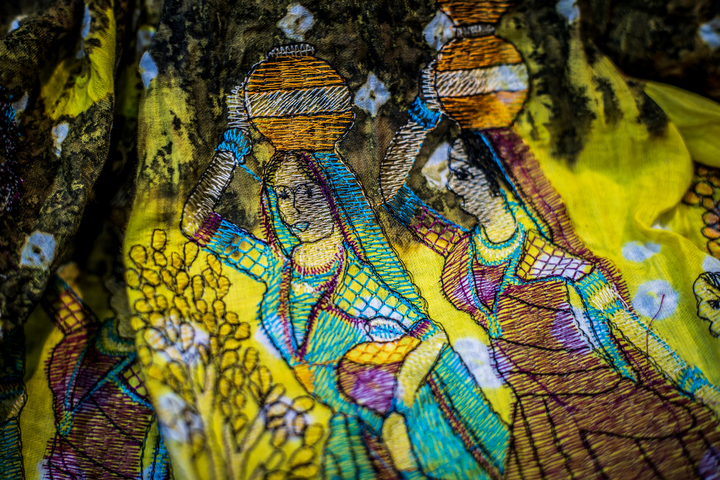
In the Civil Rights movement, activists transformed protests into impactful public theatre: freedom songs turned collective resistance into a shared emotional experience. The Chicano Movement was painted by murals and posters, which became “visual manifestos” to assert cultural identity and demand civil rights. In 1985, the community-created AIDS Memorial Quilt turned personal grief into a powerful public monument that made the scale of the epidemic visible.
Art alone tends to be limited to museums and galleries, and activism to street demonstrations and state houses, artistic activism gains traction in town squares, on streets or through social media. “The people who do the actual fighting on the street, the actual activists, they disappear. The posters become the symbol of what was done,” Art Hazelwood, one of the SFPS’s founding members, said.
That belief that art can preserve and amplify social movements is central to the work of the SFPS, a collective that has spent more than a decade turning printmaking into a tool for solidarity and political expression. The group was created in 2014, when instructors at the San Francisco Art Institute were forming a union. Hazelwood, who taught screen-printing there, started producing posters with students using leftover ink and discarded materials from classes. The prints transformed hallways into spaces of organizing and resistance.
What began as a campus effort quickly expanded into a broader network of collaboration. Hazelwood, students and independent artists continued producing posters for faculty and student campaigns while growing partnerships with unions across the Bay Area, including the Service Employees International Union and the Fast Food Workers Union.
In practice, art activism means “being open and a receptive vehicle for the activists,” Hazelwood said, which is essential in the syndicate’s process of collaborating with organizers and activists to understand what the basic messaging is.

Poster by the SF Poster Syndicate
Their process is intentionally collective: some members develop designs, draw or print posters live during demonstrations. The act of making the posters in public—then giving them away for free—becomes part of the protest itself, drawing people into the movement and reinforcing the idea that art should belong to everyone. Hazelwood described the practice as a “model of a post-capitalist world.”
That commitment to accessibility and community-centered art is shared by Melanie Cervantes, a screen printer and co-founder of Dignidad Rebelde. Her artwork, rooted in social justice movements, is intended not only for galleries and museums, but for protests, classrooms and community spaces. “It’s very important that we make art readily available,” Cervantes said. For her, the value of political art lies in who can access it. “It’s just as important to me to make it into these big institutions as it is to make it into the hands of a teenager who’s going to protest for the first time.”
Juan Fuentes, an independent artist involved with the syndicate, first began creating protest posters in the 1970s during the Chicano Rights Movement, collaborating with collectives such as Misión Gráfica. Learning the basic tools of poster-making early on gave him a way to contribute directly to political organizing.
“When you see people walking in a protest without signs, it is not effective,” Fuentes said. “Art gives us a voice,” he said, “giving you a stronger sense of who you are as a person and how you can contribute to global change.”
For Nicólas González-Medina, art belongs in public spaces, where it can amplify the voices of people too often pushed to the margins—including queer and undocumented communities like his own. Growing up in Chicago, González-Medina “saw the need for art in his community” and in his own experience. Through his first introduction to art classes, González-Medina “was able to come out of the shadows.”
Over the years González-Medina has turned streets, walls and protest spaces into platforms for both artistic expression and political action. His work centers on stories of resilience, resistance and collective identity across the Bay Area.
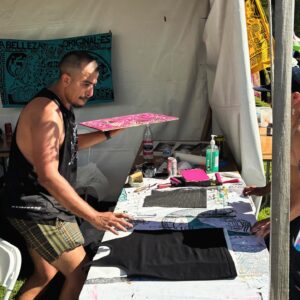
Photo courtesy of Nicólas González-Medina
“I learned to make art in community…making sure that the people most affected by injustices are the people most talking about it,” González-Medina said. He sees his artwork as a way to help others feel empowered to tell their own stories. “If it’s not in the hands of disadvantaged people, then I don’t believe in it,” he said.
Like Cervantes’s emphasis on accessibility, González-Medina sees art rooted in collective participation rather than exclusivity. “Art is not something over there, it’s something right here that we can all do,” he said. For him, art carries the ability to express shared experiences and give voice to communities often excluded from dominant narratives. “Everybody wants to be the main character and talk,” González-Medina said, “With art, I just let it speak for itself.”