

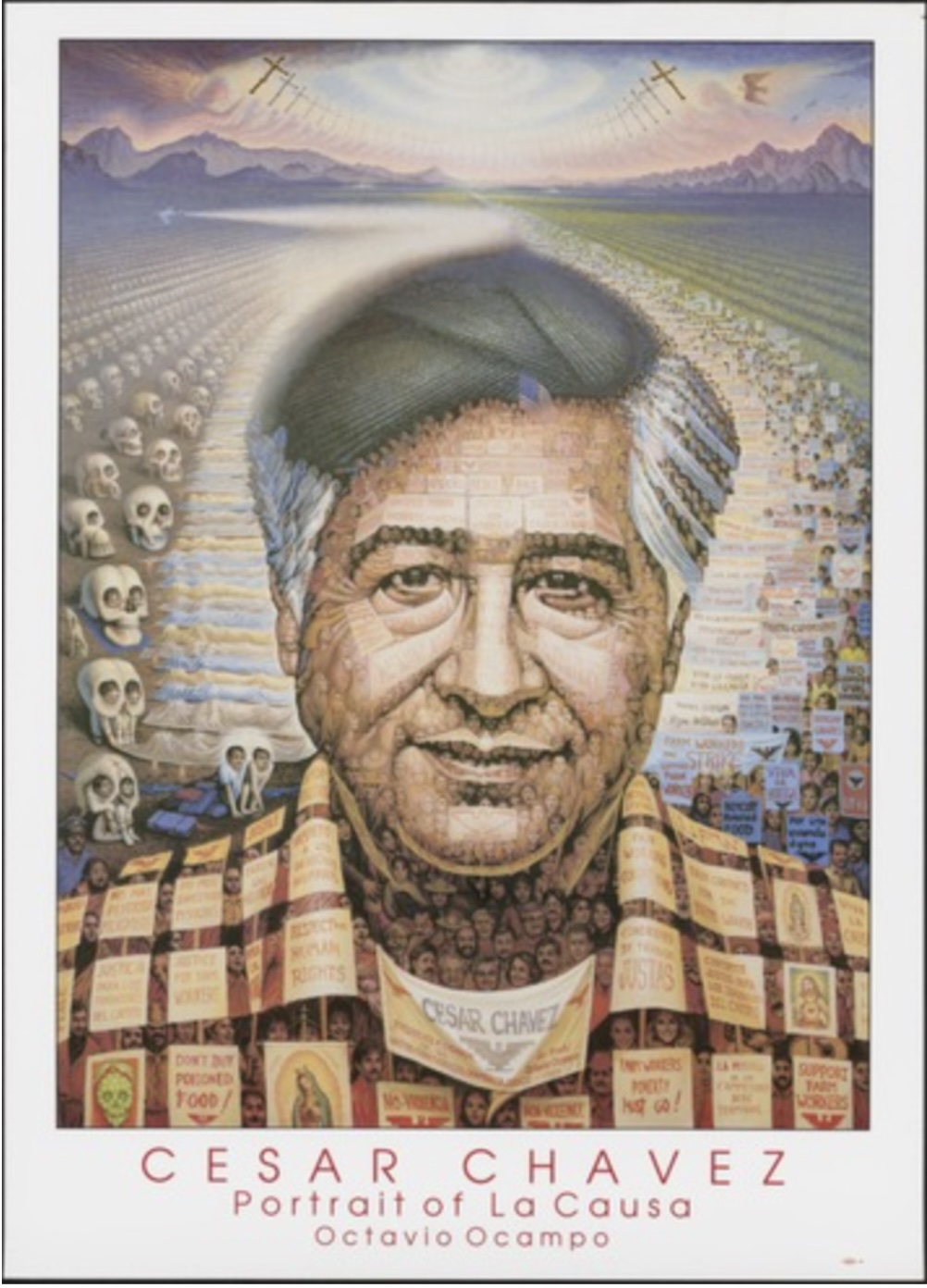
In March, multiple women, most notably Dolores Huerta, co-founder of the United Farm Workers (UFW), came forward with allegations that renowned civil rights activist and Chicano Rights Movement leader César Chávez had sexually abused them. This revelation was heartbreakingly disappointing to me—but in its own sad way, unsurprising, also forcing me to reckon with how to hold Chávez accountable without erasing the work of the movement he led.
In the car on the way to school the week after these allegations, my mother turned to me. I wish I could say I’m shocked about this news about Cesár Chávez, she said. But, I remember working in a very liberal union firm as a young woman pregnant with you, and facing some of the most blatant misogyny I have experienced in my life. I was struck by the seeming ubiquity of this tension between gender and racial equality.
Far too many of the very organizations that have fought for equality have also harbored misogyny, a disturbing pattern that urges me to grapple with these groundbreaking, yet deeply flawed movements. Why does injustice flourish in spaces seeking equality? How do we reckon with our memory of these movements? And what are we prompted to learn from the accusations against Chávez?
Chávez was the co-founder of the UFW, and through fasts, grape boycotts and marches, advocated for improved working conditions for farmworkers. An investigation by The New York Times published on March 18, 2026 found that Chávez sexually abused girls and women over decades as a civil rights advocate. Chávez groomed and molested the daughters of his colleagues as young as 12, leveraging his influence to keep them silent. He also raped Huerta, his close colleague and the UFW’s most prominent female leader, leading her to secretly carry two pregnancies.
These allegations forced me, and many other young people passionate about activism, to reckon with our memory of a Californian hero for civil rights.
“As a Mexican-American and part of a family of many activists…[Chávez] was always a model for me as a man of color…He made changes that have impacted my grandparents to be who they are now and to fight for what they fight for,” Lucas Bratt ’26 said. “He’d been, in my head, a superhero. It tore me. The idea of him as a role model just lost all its meaning for me.”
But the anger, betrayal and disappointment I feel extends beyond Chávez individually, as I think about him as one of a disturbing line of male leaders who led liberal equality movements and simultaneously perpetrated misogyny and sexual abuse.
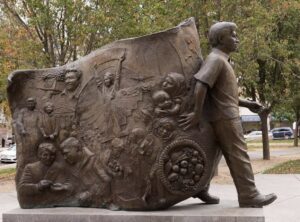
photo courtesy of public domain
Revolutionary advocate and scholar Angela Davis has written about how many racial or gender equality organizations, including the Black Panther Party, treated women of color as inferior, highlighting a need for intersectional justice. “I was criticized very severely for doing ‘men’s work’…Some of the brothers came around and said, ‘Why don’t you do something feminine? Why don’t you cook for us? Why don’t you do clerical work?’” Davis wrote in Angela Davis: An Autobiography. “I became aware of the fact that it was necessary to carry out a struggle within the movement itself.”
In part, this phenomenon may be because many victims stay silent out of commitment to the cause. “There may be a fear that women would have that if they reported this, that they’re slowing down progress,” Dr. Kimberly Bowers, who teaches the Lick-Wilmerding High School senior English seminar “(En)Gendered Violence,” said. Often, people who face intersectional oppression may feel that they can only pursue liberation in one direction, feeling obligated to sacrifice in order to achieve progress.
“There are leaders in various movements who have made compromises that involve women or involve working-class people,” Dr. Bowers said. “We have to be willing to take folks accountable…who have done good things and then committed wrongs.” Chávez was never a truly perfect figure—he made disparaging comments, for example, about illegal immigrants, which many looked past in order to preserve the image of an ideal leader.
Chavez’s leadership also relied on group therapy called “The Game,” borrowed from the violent and controlling 1970s cult Synanon, in which participants ganged up on one member, hurling insults with the stated goal of strengthening the group.
I also wonder about the motivations of perpetrators: men who, fighting against systematic oppression, may feel emasculated. Are they searching for an avenue to exert power over others, in an attempt to fulfill societal expectations of masculinity? “When you’re doing that kind of work, you’re going to have a lot of anger towards the world,” Nalin Pradhan ’26, a leader of AIF (Ad Ingenium Faciendum) and the Anti-Sexual Violence Working Group (ASV WG), said. “People who lead these organizations might feel powerless, which can lead them to seek things that make them feel like they have authority, which oftentimes means abuse and inflicting harm against other people.”
These allegations prompt us to reevaluate our understanding of the movement and think deeply about accountability.
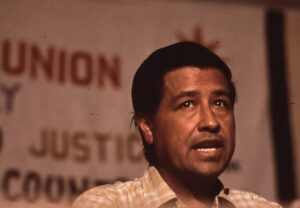
photo courtesy of Wikimedia Commons
Across the nation, schools have been stripped of Chávez’s name, murals have been repainted and statues have been covered or torn down. California renamed “César Chávez Day” to “Farmworkers’ Day.” These changes also come as the Trump administration seeks to distort history and dismantle Diversity, Equity and Inclusion practices, making it imperative that accountability for Chávez does not cause erasure of the movement he led; rather, this moment indicates a need for us to represent a more nuanced and collective history of the UFW.
“I think part of the problem is this hero status. I mean, we’re investing in a hierarchy,” Bowers said. Huerta has stated that memorials should celebrate “UFW martyrs, organizers, farmworkers and families who sacrificed everything to build something bigger than any one person.”
The accountability we have seen for Chávez—though imperfect and incomplete—is what we should, but have not, seen for white men in power who commit sexual abuse, including the many high-profile figures in the Epstein files, and President Donald Trump, who has been accused of sexual misconduct by nearly 30 women. This disparity highlights the lack of consequences for the powerful, wealthy and white, and illustrates how quickly people jump to feed stereotypes about men of color.
“Society has put labels on men of color, you know, as violent, sexist, aggressive,” Pradhan said. “I think that something men of color don’t realize is that one of the best things they can do to combat this is to be compassionate and gentle people, which I think society really lacks within norms about masculinity, especially within groups of color.”
Ultimately, the allegations against Chávez are an imperative call to learn and improve the ways that we organize, remember history and hold each other accountable.
“[Violence] is something that is learned,” Pradhan said. “In AIF we are working on being tender and being more affectionate…because a lot of guys of color have been stripped of love throughout their childhood…and end up being hard and cold.”
“No march, movement, or agenda that defines manhood in the narrowest terms and seeks to make women lesser partners in this quest for equality can be considered a positive step,” Davis wrote in her essay collection Women, Culture & Politics. “The roots of sexism and homophobia are found in the same economic and political institutions that serve as the foundation of racism in this country…Our political activism must clearly manifest our understanding of these connections.”
Though the precise destination may be unclear, as we work towards growth and healing, it is important that we not only confront our memory of the perpetrator of this violence, but also orient ourselves in a way that honors the survivors.