



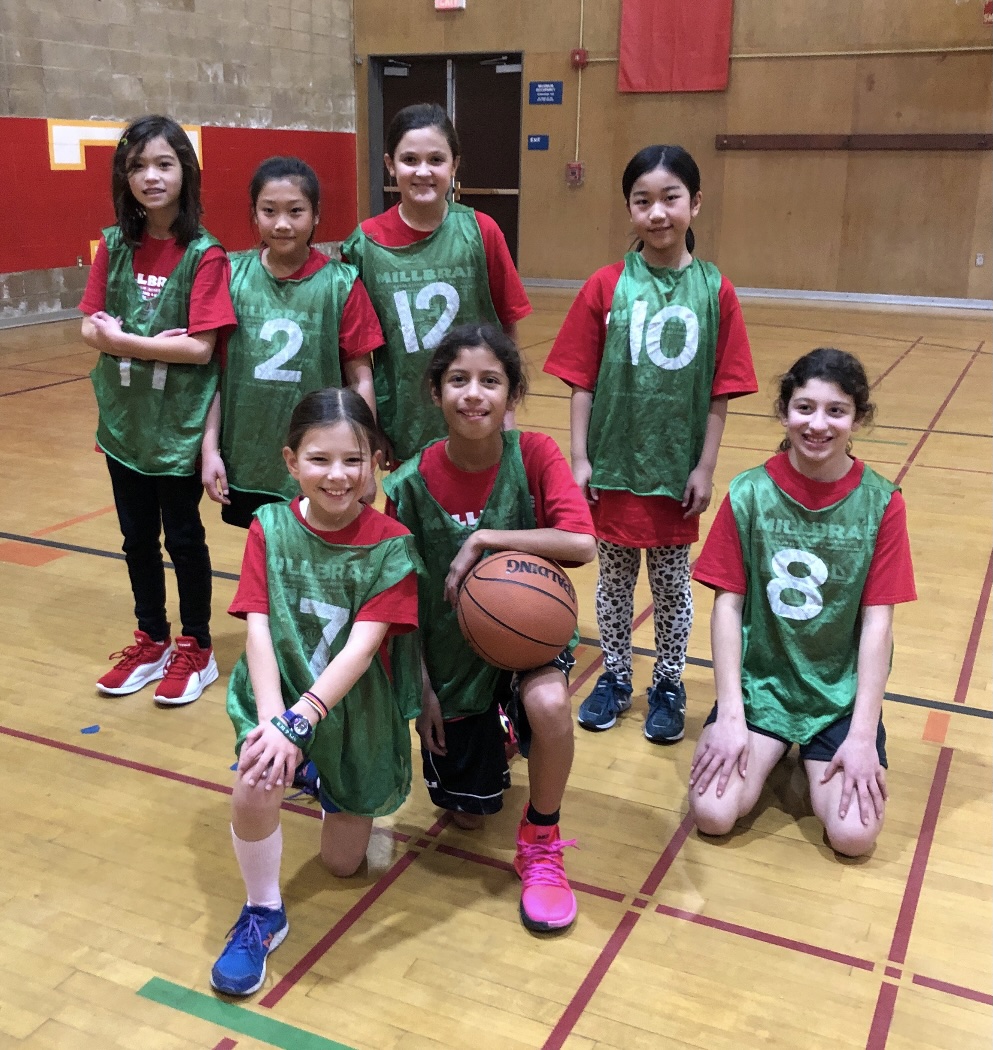
It’s an airless Saturday morning inside a packed basketball gym in Irvine, California. Our club team flew in from San Francisco last night for a travel tournament. Before our second game of the day, a few of the girls are sitting on the bench laughing and guzzling down Gatorades while some are eye-balling the tournament-branded sweatshirts they want to take home as souvenirs. But I’m in the corner by a trashcan, feeling like I need to throw up.
I’d always been nervous before games—“it shows that you care,” my coach would reassure me. But this felt different. My palms were sweaty and my mouth was bone dry. I’d recently been named team co-captain and my anxiety was through the roof. I was 12 years old.
The experience I’m describing is more common than ever in the United States. American youth sports has ballooned into a $40 billion dollar a year industry, bigger than the NFL and the entire global movie box office. I was one of 5 million young athletes competing on a club team, which meant intense training, year-round competition, and hundreds of hours of travel.
Youth sports are not just intensifying, they are professionalizing.
Studies show that repeatedly playing one sport from a young age can lead to stress, burnout and overuse injuries, which is why many children quit organized sports by the age of 13.
This fall will be the first season I haven’t played on a club team in over a decade. And it made me think…was playing club sports my whole life even worth it?
My basketball career started in elementary school with my dad as my coach, and the local rec center as my home court. I was hooked from the very beginning, yet I quickly realized if I wanted to compete at the next level, I had to join a club team.
My transition to club basketball happened fast. Lighthearted games of knockout with my neighborhood friends quickly turned into grueling, multi-hour practices with girls from a dozen different schools. It wasn’t uncommon to get home at 10pm multiple times a week. I started to see results immediately. I was faster, stronger, and more confident on the court. I was becoming a better basketball player.

photo by Julia Padova ’28
“A lot of the things you learn in sports are very much applicable to other aspects of your life,” said Dr. Kristene Hossepian, a psychologist who runs the Success in Youth Sports Clinic, a mental health clinic at Stanford devoted to serving the needs of young athletes. “From a high commitment and a high pressure situation, you learn a lot about time management, resiliency, and mental health as a whole.”
It seemed the more I improved, the more time and money my family dumped into basketball. Weekends were spent in the car driving to games. Summers suddenly revolved around out-of-state tournaments designed to showcase “elite” athletes as young as 9-years-old. There were plane tickets, hotel rooms, expensive equipment and private trainers. And there was another cost in the things I missed: birthday parties, friends’ sleepovers, school dances.
“When the investment in youth sports gets larger, there is a trickle-down effect to the athletes,” Hossepian said. And the more my family invested, the more pressure I felt to make their investment worthwhile. A basketball game was no longer a friendly competition among peers, it was a high-stakes performance with real winners and losers. It could open doors (to scouts and schools and other clubs), but it could also leave you feeling lost and anxious and looking for a trashcan.
And that is the contradiction at the core of club sports: The more you invest, the harder it becomes to walk away.
For some athletes, the sacrifices and investments of club sports leads them exactly where they want to go.
Lilah Wilkinson ’28 has played club lacrosse since the 4th grade. By 8th grade, she knew she wanted to be recruited to play in college.
Of course Wilkinson is in a very small minority: only 2% of young athletes will go on to play Division 1 in college, and only 0.05% will go pro.
This summer she devoted herself to lacrosse. She spent two months on the East Coast competing in 15 different showcases in front of college coaches. “I really didn’t have too much of a break and it was a huge sacrifice for me and my family,” she said.
But her sacrifices paid off in the end. In September, she committed to playing Division 1 lacrosse at the University of Cincinnati. “It goes to show that if you put in the hard work, it definitely amounts to something.”
For Wilkinson, the sacrifices helped pave a path toward a goal she had chosen. But what happens if you lose your appetite for the game? Or worse, you’re no longer physically able to perform?
“I’m at school and my mom calls me. ‘Can you sit down? I need to talk to you,’” recalled Amelia Davies ’27. After playing in a club soccer game in Santa Cruz, a girl on the opposing team slide-tackled her and Davies collapsed. All she heard was a pop.
“My ACL was completely torn, just a completely empty space where it was supposed to be,” she said. She went from playing soccer 5-7 times a week, to not having touched a ball since October of last year.
Davies is determined to play again this upcoming season, but for other athletes, an injury like this can do more than take away their ability to compete. For developing children who have spent years building their lives around sports, not being able to play means losing a routine, losing connections, losing a social circle, and losing a sense of who you are.
“[When playing high-commitment club sports] there is so much concentrated identity development in such a short window of time,” said Hossepian, “Which is why I encourage my patients to develop an identity outside of their sport.”
For me, that was easier said than done.
Basketball had been part of nearly every stage of my childhood. It dominated my schedule and shaped my relationships. It had become such a big part of who I was that taking a step back from it felt almost existential.
My final club basketball game was not emotional. In fact, I can’t even remember if we won or lost. All I remember was the car ride home.
Sitting in Saturday traffic I thought about the hours I’d sacrificed, the tears I cried, the hands that helped me up off the court when I fell, the moments of triumph and of intense anxiety, the late nights and the early mornings. Playing on a club basketball team was incredibly stressful and exhausting, but has also been one of the most meaningful parts of my life so far.
I can’t say club sports are inherently bad, because they are not. They helped me forge friendships, taught me discipline and resilience, and made me better at a game I truly enjoyed playing. But somewhere along the way, the sacrifices became too much, and the pressure to perform was inseparable from the sport itself.
“Sports are complicated in the sense that they can both simultaneously be a source of intense stress and a source of intense joy,” said Hossepian. The trick is finding that balance.




+ There are no comments
Add yours