




On August 26, 2026, a massive landmark case was settled between a coalition of 51 states and territories and social media giant Meta. The suit alleged that Meta knew its product, Instagram, was harmful to children and still intentionally branded it to and for children. Regulations such as a two hour time limit, disabled like count on posts and no notifications during school hours are going to be imposed on Instagram users under the age of 18. The new regulations are expected to roll out in early 2027.
The lawsuit marks a major turning point in how social media companies are held responsible. In the past, social media companies like Meta have been able to hide behind Section 230 of the Communications Decency Act of 1996, which dictates that companies cannot be held responsible for things posted on their platforms.
Lick-Wilmerding High School junior Addison Shin ’28 voiced her opinions on the new regulations. “When it comes to their addictions like doom scrolling, the less opportunities teenagers have to self-regulate themselves can be bad in the long run. There’s an argument that teenagers have proven that they can’t self-regulate, and maybe we’re at a point where someone has to swoop in and help them,” Shin said.
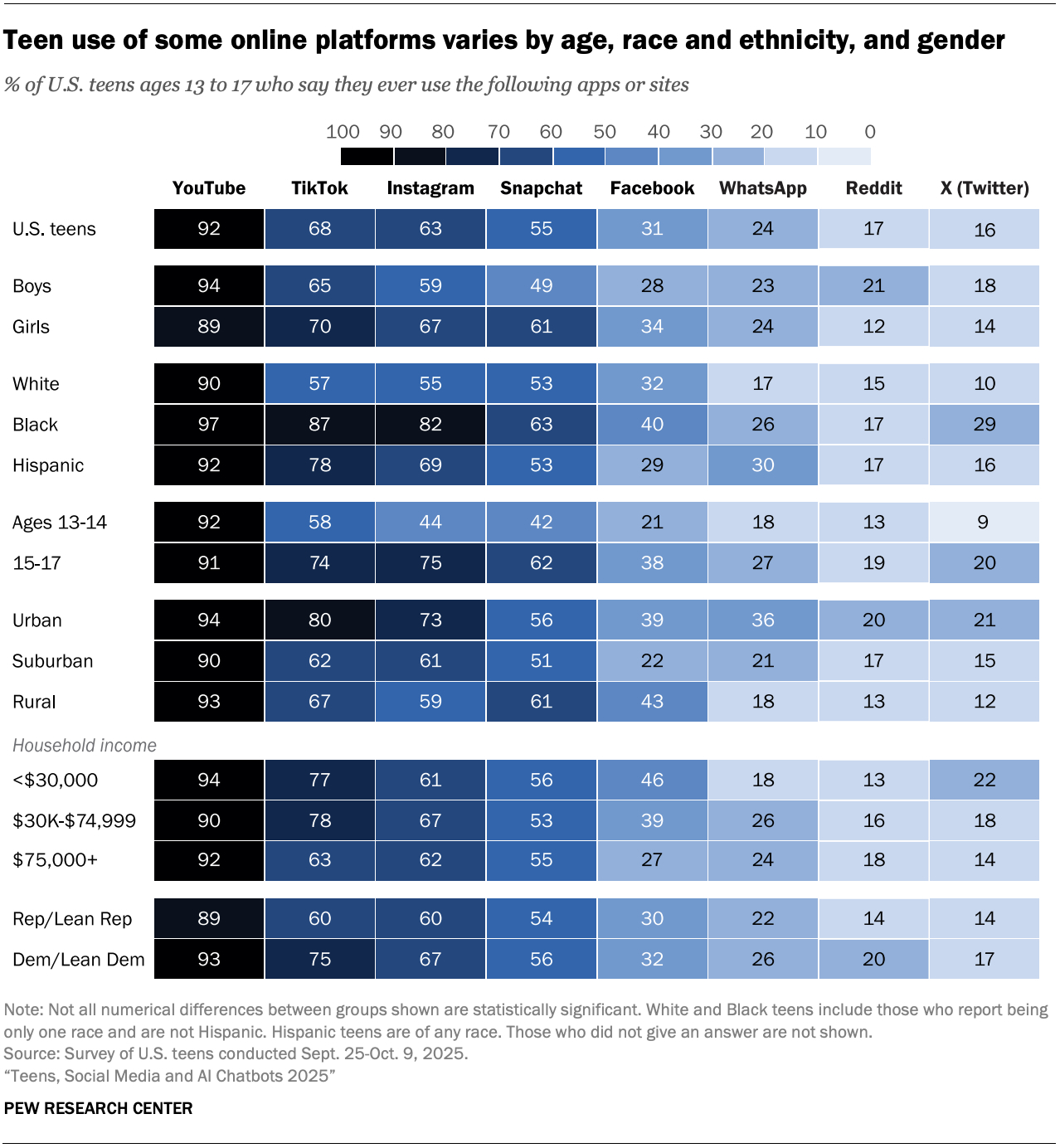
photo courtesy of Pew Research center
In this lawsuit, litigators targeted intentional features like infinite scrolling and push notifications, arguing that they were intentionally engineered to be addictive to users, specifically children, and that companies do not give proper warning about these features to customers. A study conducted in 2025 by Pew Research Center shows 3 in 4 teenagers aged 15-17 use Instagram.
“When it comes to their addictions like doom scrolling, the less opportunities teenagers have to self-regulate themselves can be bad in the long run. There’s an argument that teenagers have proven that they can’t self-regulate, and maybe we’re at a point where someone has to swoop in and help them,” Shin said.
In this lawsuit, litigators targeted intentional features like infinite scrolling and push notifications, arguing that they were intentionally engineered to be addictive to users, specifically children, and that companies do not give proper warning about these features to customers. A study conducted in 2025 by Pew Research Center shows 3 in 4 teenagers aged 15-17 use Instagram.
This lawsuit comes as Meta has stared down over 100,000 personal injury arbitration claims since March 2024 and around 1,200 lawsuits from school districts across the country. Other companies, like TikTok, and Snap, the owners of Snapchat, also face enormous amounts of lawsuits in the coming months.
One of the most prevalent social media features targeted in the settlement was like counts on posts. One of the biggest contentions with social media is that it enables users, especially teens, to compare themselves to what they see on their peers’ posts.
LWHS student Alexandra Willden ’28, a frequent user of Instagram, admits that she cares about the like count. “I think that I tell myself that I don’t, and it is definitely posted not with the intention of getting likes, but I check my like count, so I think that means I have to care, right?”
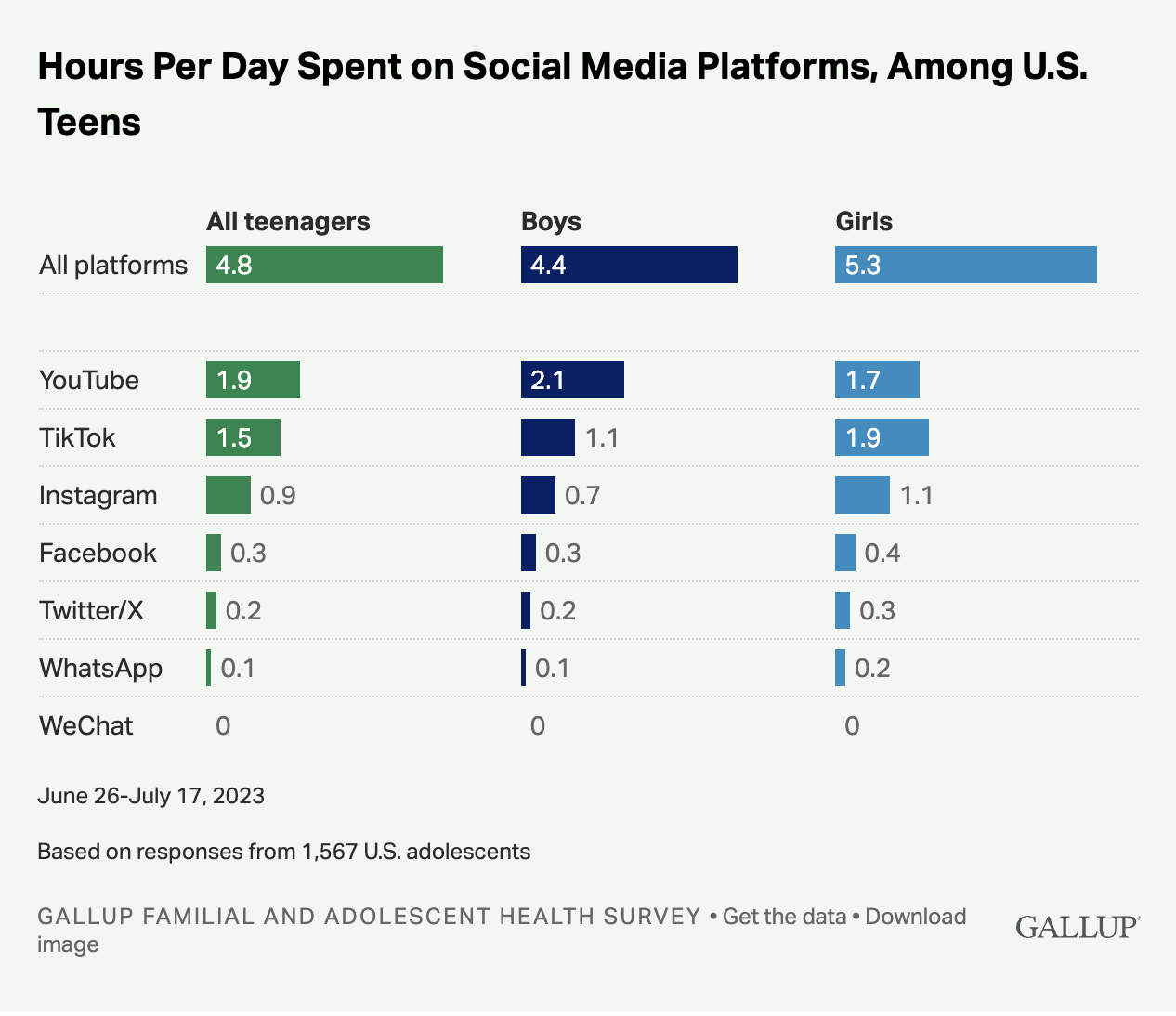
Poll showing the number of time on average teenagers spend on apps. In other Gallup polls, the time spent on social media decreases with more conscientiousness and stricter parental controls.
Photo courtesy of Gallup
Artemis Boda ’27, who uses Instagram as a place to post photo diaries and communicate with friends, noted a different attitude toward like count. “I don’t care. I expect some of my closer friends to like my stories and posts, but I don’t really care about the number,” he said.
Anthony Shin ’27 frequently posted on Instagram to showcase his fashion style.“You put your outfit out there and that’s something you’ve been working on for a while. You put that out there and you kind of get to directly see what people think of it through likes and comments… there’s definitely some sort of approval seeking and I think that’s true for most people who post on insta ” Shin said.
A Gallup poll from 2023 shows that among U.S. teens the average time spent on Instagram is 0.9 hours and the average time spent on TikTok is 1.5 hours. Some of this can be attributed to features like infinite scrolling, which allow users to get easily lost in scrolling short form content by providing a non-stop flow of videos.
Infinite scrolling is targeted by the Meta settlement as well. Commenting on his usage time on reels, Makoa Apana-Chan ’28 said, “Well, it depends if I’m doing stuff. If I’m doing something probably like an hour or two [on reels]. But if I’m not, eight at the max.”
Maxxy Frey ’27 recognized a similar pattern of excessive scrolling in his life and decided to delete Instagram entirely. “With Instagram, when I was bored, I felt like I would just go into the cycle of just staying on Reels, not doing anything, and having low energy. After deleting it, I genuinely started working on my college apps for fun because I was so bored,” Frey said.
photo courtesy of Wikimedia Commons
In a 2016 JAMA pediatrics study, excessive device usage has been linked to worse sleep in teenagers. Ben Eisenberg ’28, another Instagram user, notes that he goes to bed later because of scrolling.“It just delays when I can start, and then delays my bedtime from probably like 10 to like 11,” Eisenberg said. Apana-Chan has a similar experience.“Before I start my homework, I’m thinking about doing my homework and I really don’t want to do my homework, so I just delay it by scrolling, and it feels good not doing my homework, because starting is hard. That’s the hardest part for me,” Apana-Chan said.
Apana-Chan commented on the addictiveness of scrolling compared to other activities, saying, “How can you swallow the frog when you have candy in your mouth?” The phrase “swallowing the frog” refers to doing the hardest task before anything else.
Notification features were also targeted in the lawsuit, but students did not share that they were a major intrusion. “My phone doesn’t vibrate when I get a notification, and so only if I’m on my phone for a long period of time, or the rare instance my phone is not on do not disturb it’ll buzz, but I don’t get other push notifications,” Boda said.
When asked directly about their opinions on the new regulations, users generally liked and agreed with what the coalition of states claimed. “I’ve always been a fan of hiding like count,” Shin said.
The regulations are not flawless, though. When you sign up for Instagram, Meta does not verify your age through government ID or facial scan, making it possible for minors to easily claim they are over the age of 18.
There is also concern over the effectiveness of forcing these new rules onto users. “I think it’d be better if there was an optional system, where it recommends you to have some limit. I think people would be kind of mad if it was hard stuck. I feel like it would breed a lot of spite in people,” Shin said.
The new regulations mark a shift in the accountability of social media giants. At LWHS, the new regulations are met with cautious optimism and a willingness to part with key features of Instagram such as like counts and infinite scrolling, but concerns over effectiveness and forcing restrictions on users accompany that optimism.
Whatever the restrictions bring, what is for certain is that this settlement ushers in a new era of technological regulation.






+ There are no comments
Add yours